
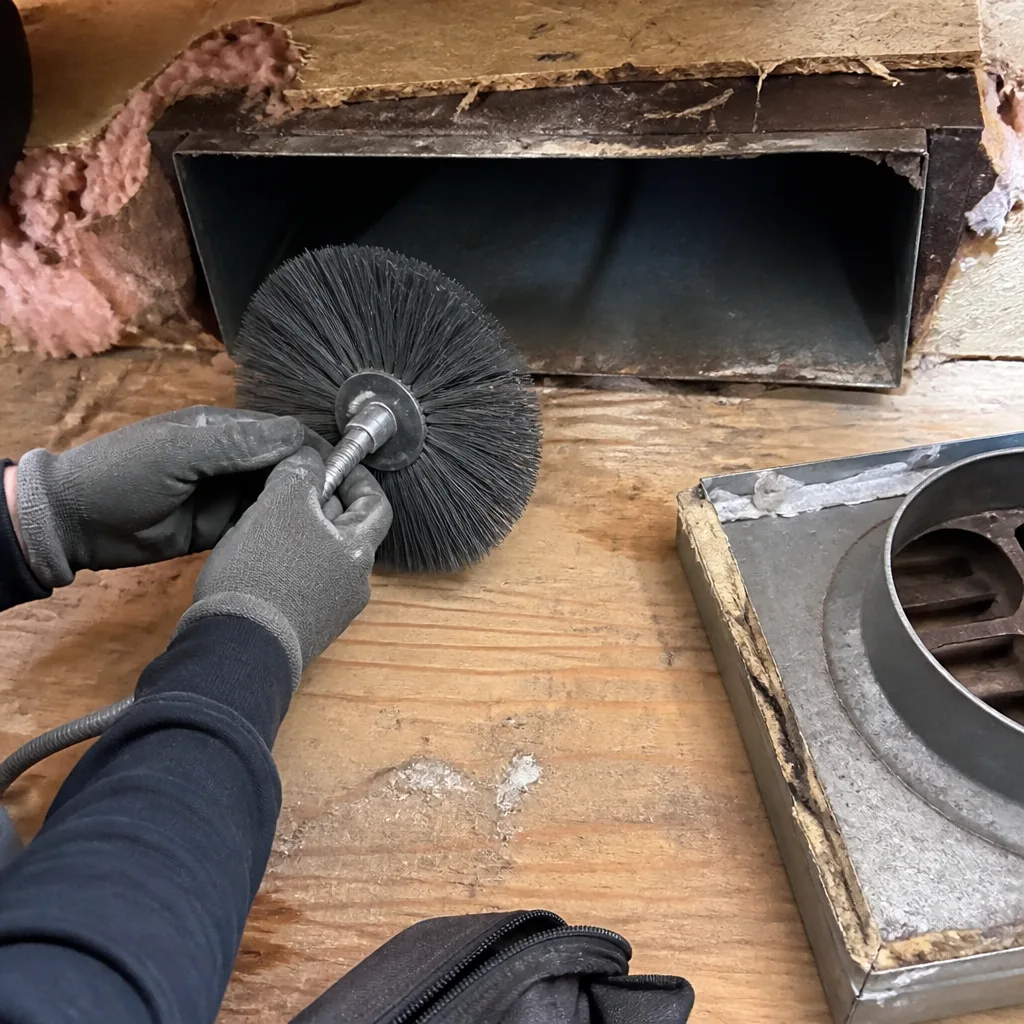
Last updated October 15, 2026
 Whole-home duct cleaning
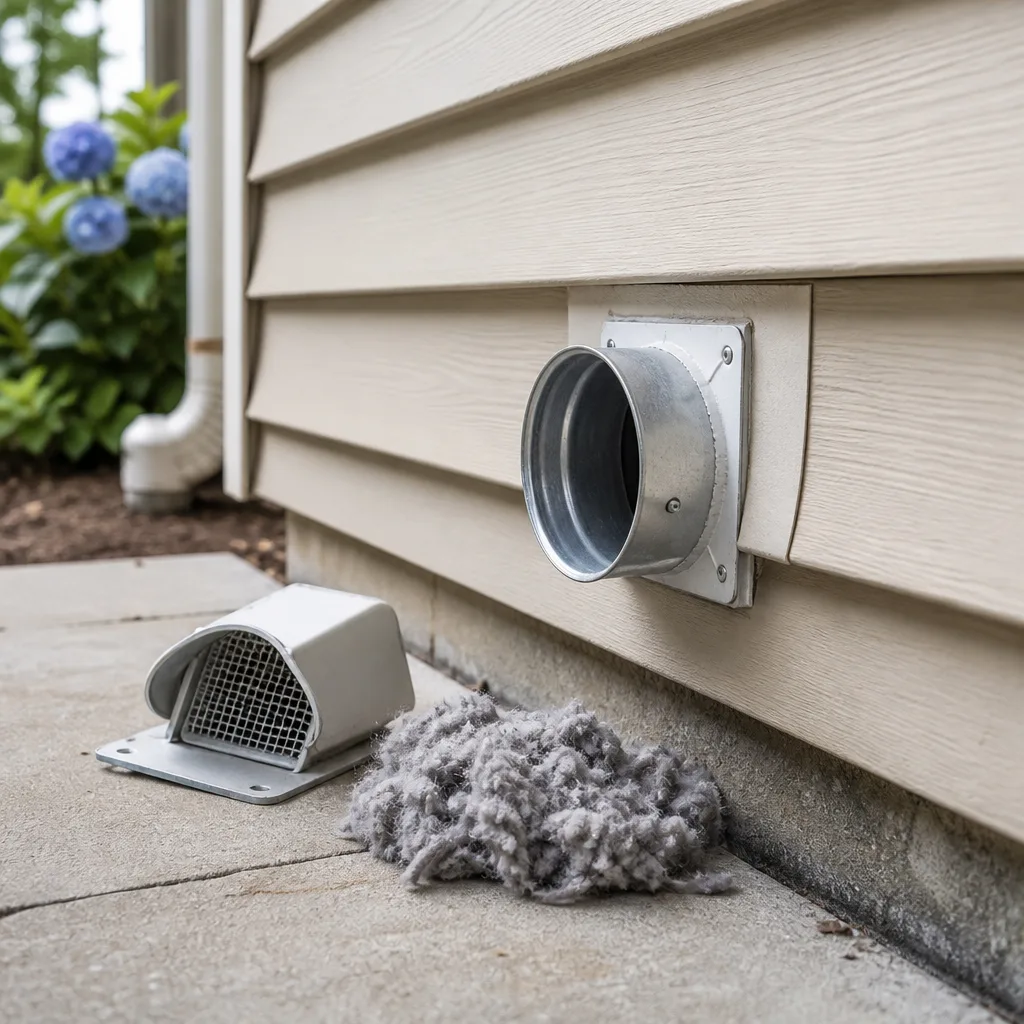 Dryer vent cleaning
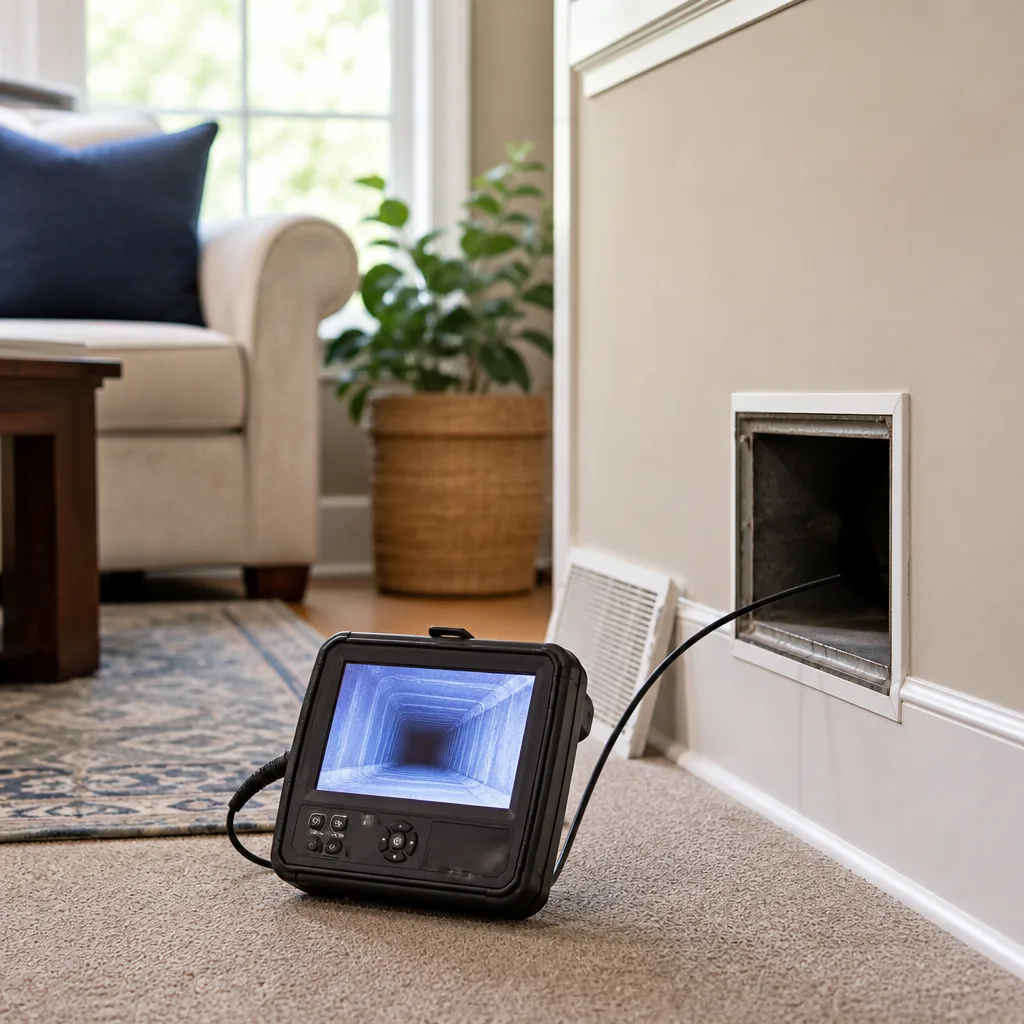 Camera inspection
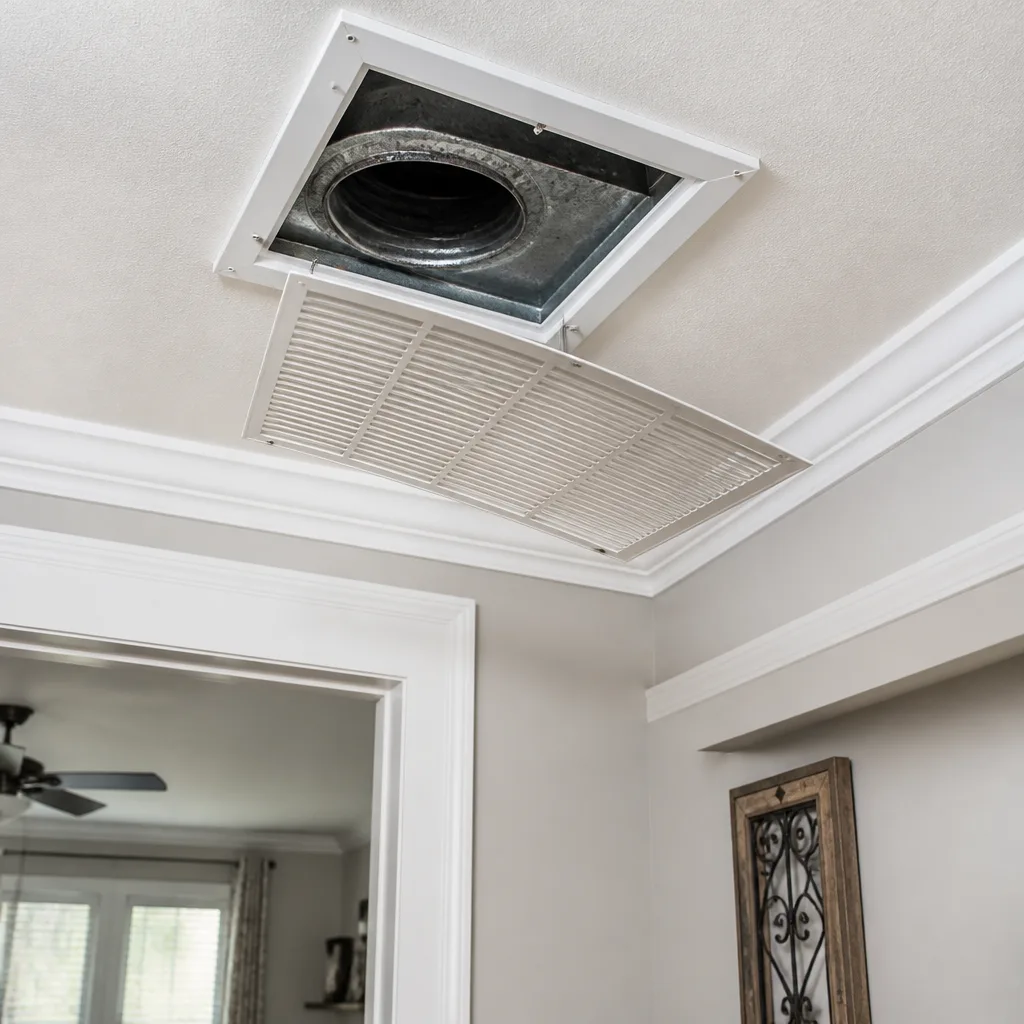 Sanitizing & deodorizing
Whole-system duct and dryer vent check with before-and-after photos - you see exactly what came out of your vents
That "$99 whole-house special" is a bait ad - the real number appears once they are in your hallway, or the "clean" is a shop-vac at the register. We photograph the inside of your ducts before and after instead.
DIY vs Professional Air Duct Cleaning: The Sandy Springs Homeowner’s Decision Guide
Here’s a number most homeowners in Sandy Springs don’t know: the brush-and-vacuum kits sold at home improvement stores were originally designed to clean dryer vents, which are short, straight runs of pipe. The physics that makes them work there is exactly what makes them fail in a branched supply trunk system that runs 40 feet through a Georgia attic. This guide explains what DIY duct cleaning can and cannot physically accomplish, what our Air Duct Cleaning services do differently with professional equipment, and how to decide which route makes sense for your home, your time, and your money.
Quick Answer
DIY air duct cleaning with a shop vacuum and brush kit removes surface debris from registers and the first few feet of visible ductwork, but it cannot achieve the negative-pressure source removal that dislodges and captures contamination deeper in the system. A professional cleaning typically costs $350 to $750 for a full home in Sandy Springs, while a DIY attempt costs $50 to $150 in supplies and leaves most of the contamination untouched. For most homes, the decision comes down to what equipment can physically accomplish, not how much effort you’re willing to put in.
Styles & brands we work with
Table of Contents
- What DIY Duct Cleaning Actually Does (and Does Not Do)
- How Professional Negative-Pressure Source Removal Works
- Equipment Comparison: What’s Actually in the Truck
- Sandy Springs-Specific Factors That Change the Equation
- What Homeowners Can Legitimately Do Between Professional Visits
- The Hidden Costs of DIY Duct Cleaning
- What a Professional Invoice Should Document
- Making the Decision: A Step-by-Step Framework
What DIY Duct Cleaning Actually Does (and Does Not Do)
When you attach a brush to a shop vac hose and push it into a floor register, you’re cleaning the register boot and perhaps the first 18 to 24 inches of the branch line. That’s the reality. A shop vacuum rated at 90 to 150 CFM simply cannot pull air fast enough through a 6-inch branch duct to lift debris that has settled 15 feet down the line. The brush loosens what it touches, but the vacuum doesn’t have the draw to capture it. What happens instead is that debris gets pushed further from the register, or it falls off the brush and resettles deeper in the run.
We see this pattern repeatedly in Sandy Springs homes, particularly in Dunwoody, Roswell, and along the GA-400 corridor where attic ductwork runs long and flat. Homeowners spend a Saturday pushing brushes through their registers, then call us weeks later because their supply air smells dusty or the system seems to be throwing off more particulate than before. The DIY attempt didn’t fail because they lacked skill. It failed because the equipment cannot physically reach or capture what’s in the ducts.
The truth is uncomfortable but straightforward: a brush-and-vac kit is designed for a straight pipe you can see through. Duct systems in homes are branched, angled, often insulated, and run through unconditioned attic space where Georgian humidity condenses on interior surfaces during summer. The physics is not on your side.
How Professional Negative-Pressure Source Removal Works
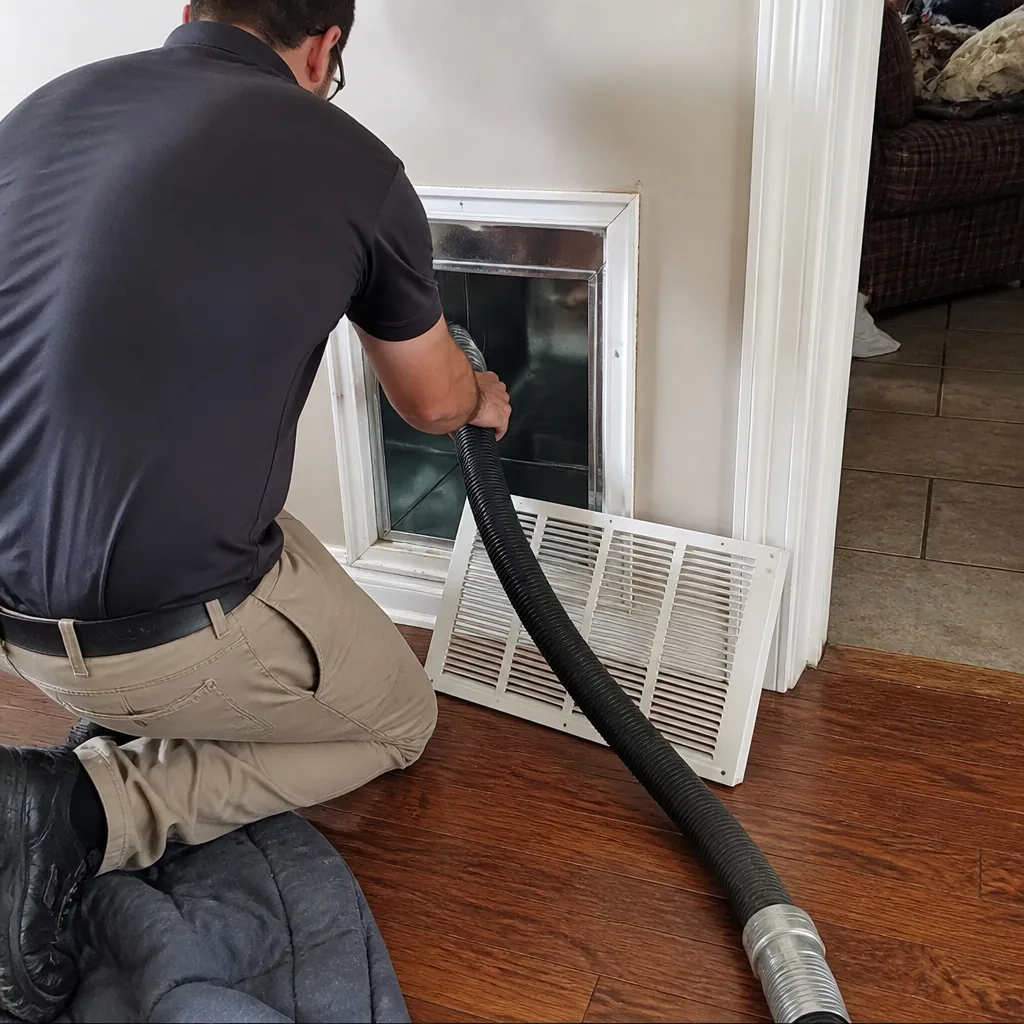
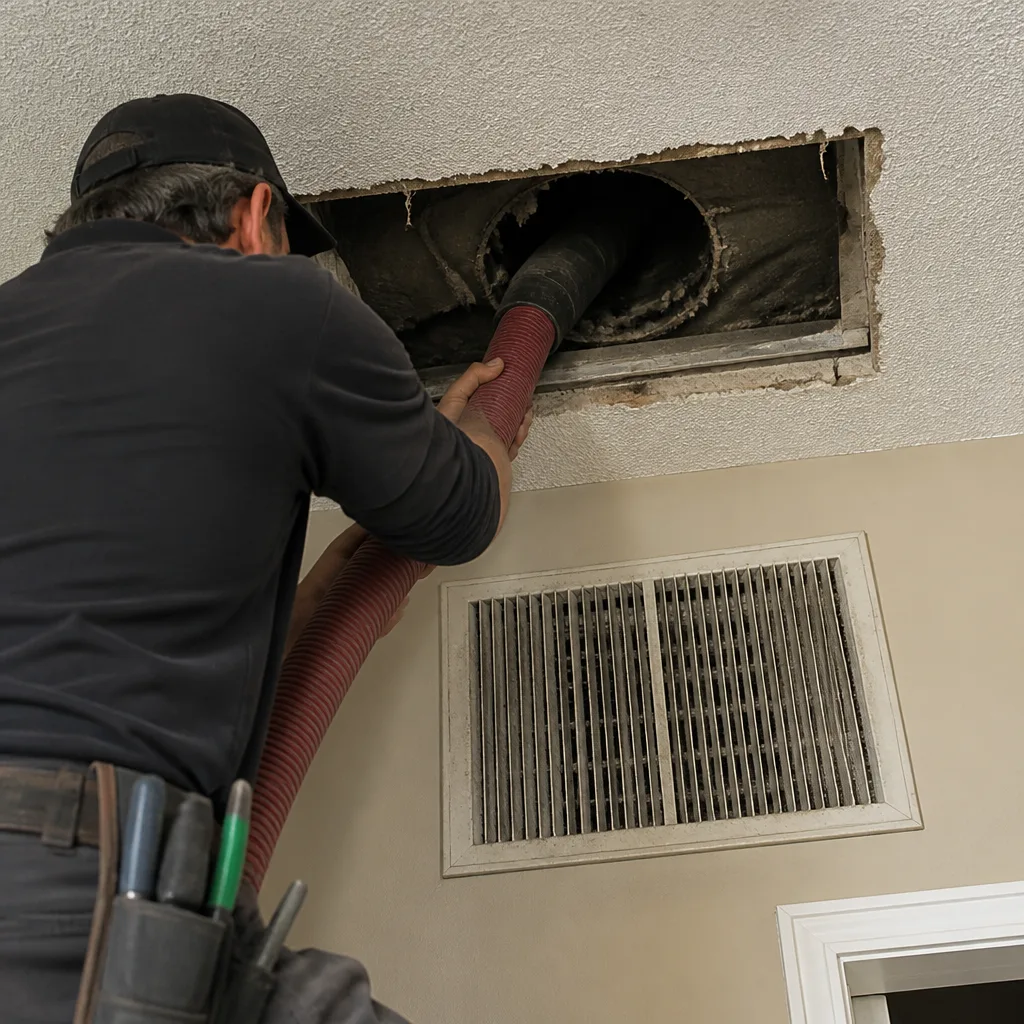
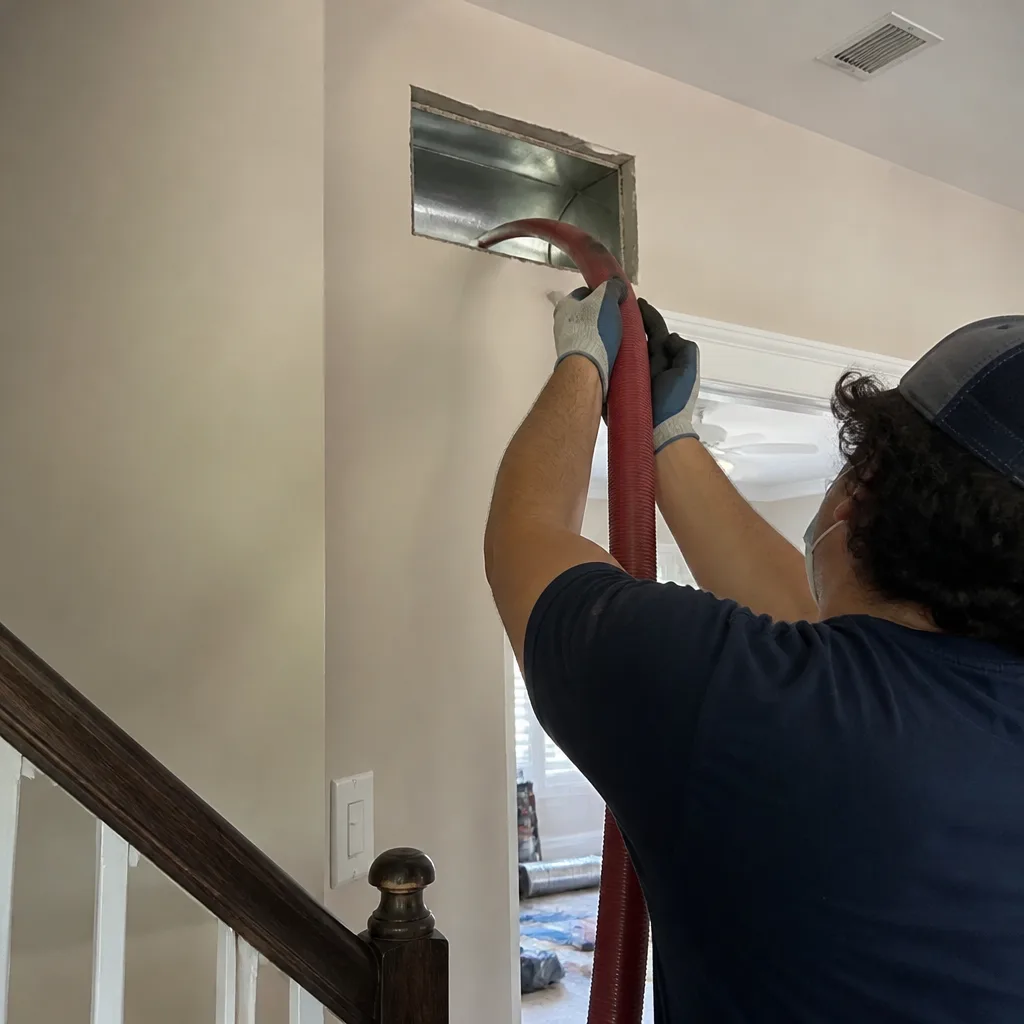
Negative-pressure source removal is the industry term for what professional cleaning actually does, and the name matters. The system creates suction that is stronger than the force holding debris in place, then uses agitation tools to dislodge contamination while that suction is actively pulling everything out of the system. It’s not one or the other. It’s both, at the same time, moving through the entire duct network.
Here’s what that looks like mechanically:
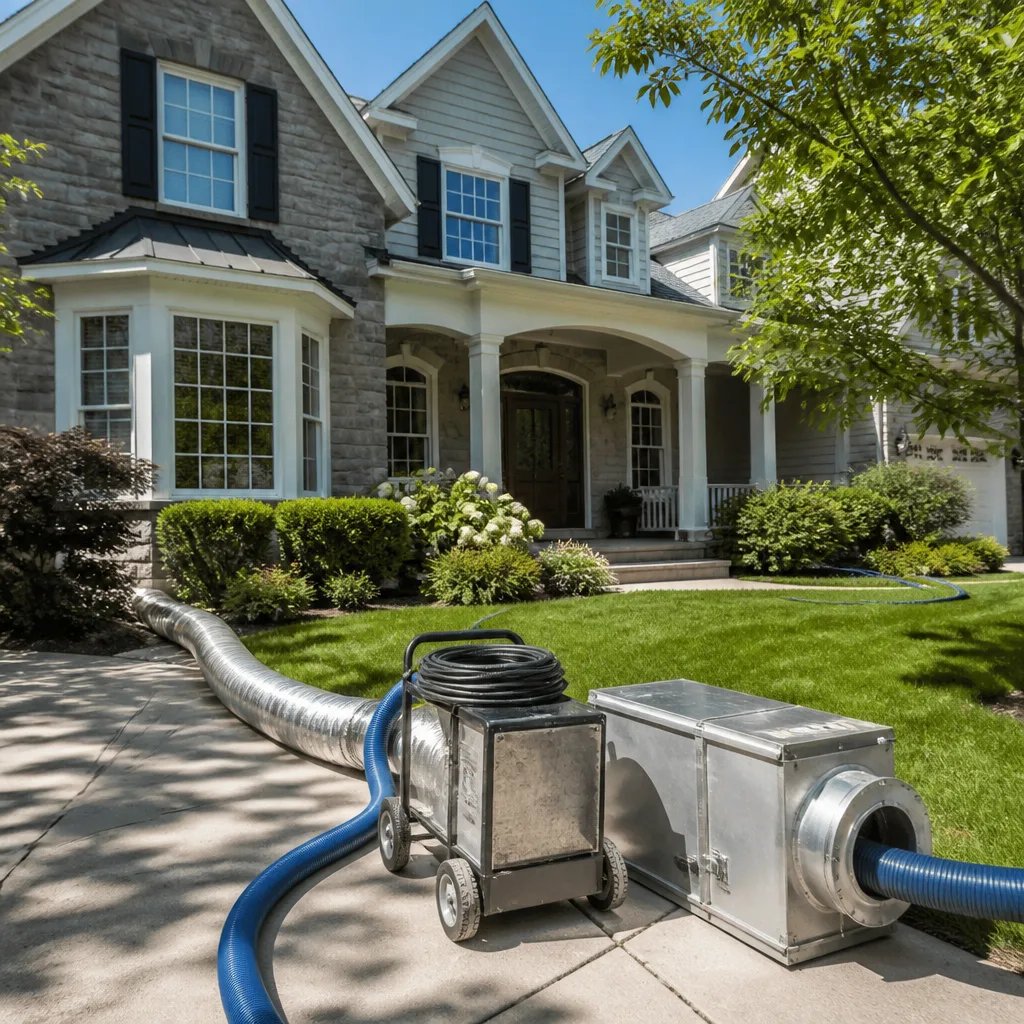
- A high-output vacuum unit connects to the main supply trunk or return plenum, typically at the air handler. These units are rated between 2,000 and 6,000 CFM, which is twenty to forty times what a household shop vacuum moves.
- Access ports are cut at strategic points along the trunk lines so tools can reach every branch. The ports are sealed after the job with metal patches, not tape.
- Rotary brush systems, compressed air wands, or manual agitation tools break loose the debris film that adheres to duct walls. On our trucks, the Air Duct Cleaning in Sandy Springs crews use Rotobrush rotary brush systems for branch lines and Nikro negative-air machines for trunk lines.
- Because the system is under negative pressure the entire time, anything that comes loose is pulled downstream toward the collection unit rather than drifting out through your registers into living spaces.
- After the interior surfaces are clean, the system runs for 15 to 30 minutes with the vacuum still attached to capture airborne particles before the job is considered complete.
The collection unit’s CFM rating is the single most important number nobody talks about. If suction is too low, agitation just stirs up contamination and sends it back into circulation. This is precisely what happens with consumer equipment, and it’s why the “cleaning” often leaves indoor air quality worse than before the project started.
Equipment Comparison: What’s Actually in the Truck
Understanding the difference between what you can rent or buy and what professional crews run changes how you think about the do-it-yourself option. For How to Hire a Air Duct Cleaning Contractor in Sandy Springs: A Step-by-Step Guide, here’s the breakdown:
| Equipment Factor | DIY / Consumer | Professional |
|---|---|---|
| Vacuum unit | Shop vacuum, 90 – 150 CFM | Truck-mounted or portable negative air unit, 2,000 – 6,000 CFM |
| Agitation method | Flexible brush on a rod, manual rotation | Powered rotary brush (e.g., Rotobrush) or compressed air whip |
| Reach | 4 – 10 feet from register opening | Every branch line, trunk, and plenum via access ports |
| Filtration | Standard shop vac filter | HEPA filtration at the collection point (Honeywell and Guardsman products are common on our jobs) |
| Containment | None | Negative pressure holds the system sealed during agitation |
| Before/after record | None | Camera inspection, photo documentation, written report |
The filtration piece deserves attention. A shop vac filter catches what the vacuum pulls in, but fine particulate passes through and gets exhausted right back into the room where you’re working. A professional unit draws from the duct system and exhausts outside or through HEPA filtration. That’s a mechanical difference, not a marketing difference.
Sandy Springs-Specific Factors That Change the Equation
Sandy Springs sits at an elevation that puts attics squarely in the hot zone from May through September. Attic temperatures routinely hit 130 to 145 degrees in July and August. Ductwork running through that space sees significant temperature swings between conditioned air flowing through and ambient heat cooking the exterior. That cycle does two things relevant to duct cleaning.
First, it accelerates the breakdown of dust, pollen, and biological material inside the ducts. When the system is off, that material dries and bakes. When the system kicks on, the cooled air causes condensation, especially on the return side. The result is a sticky film that adheres to duct walls, and that film is exactly what brushes and shop vacuums cannot remove. It requires agitation plus meaningful airflow.
Second, the humidity profile in metro Atlanta means microbial growth inside ductwork is a real concern in homes built before modern moisture barriers. Homes in the Riverside Drive corridor, old Sandy Springs neighborhoods near the Chattahoochee River, and houses built in the 1970s and 1980s often have insulation that has degraded and flexible ducts that have sagged, creating low spots where moisture pools and debris accumulates. Those conditions are invisible from a floor register, and no brush kit will reach them.
The tree cover and pollen load also matter. Sandy Springs has heavy spring pollen from oak and pine, and a substantial portion of that particulate eventually works into return ducts and across evaporator coils. Homeowners here deal with a higher baseline particulate load than drier climates. For anyone with allergies or asthma in the household, a system that is genuinely clean is a quality-of-life difference, not a marginal gain.
For homes that need more than cleaning, Duct Sealing in Sandy Springs addresses leaks that let conditioned air escape into attics and crawlspaces. A thorough cleaning often reveals sealing needs that were previously hidden.
What Homeowners Can Legitimately Do Between Professional Visits
This is the honest part of the conversation. There are two maintenance tasks a homeowner can absolutely handle, and doing them well extends the life of a professional cleaning and improves system performance between services.
1. Register Cleaning
Remove your floor registers and wall grilles, wash them in warm soapy water, dry them completely, and vacuum the visible boot area with a standard household vacuum. This removes the surface layer of dust that builds up in the first few inches of the run and keeps debris from being drawn back into the system when the blower cycles. Do this twice a year, spring and fall, to match pollen and dust seasons in Sandy Springs.
2. Filter Replacement
Change your HVAC filter on a schedule that matches your home’s conditions. In Sandy Springs, that typically means every 30 to 60 days during peak pollen season and every 60 to 90 days the rest of the year. A clogged filter increases static pressure, forces the blower to work harder, and draws unfiltered air through any gaps in the filter rack. Use a filter rated MERV 8 to MERV 11 for a balance of filtration and airflow; anything higher requires a blower designed for it.
Those two tasks are genuinely useful and belong entirely in the DIY category. What they don’t do is replace source removal. We tell homeowners to think of it like this: cleaning registers is sweeping the porch. Proper duct cleaning is cleaning out the house.
The Hidden Costs of DIY Duct Cleaning
The sticker price of a DIY kit is $40 to $80, and a shop vac rental adds $25 to $50 if you don’t own one. That’s the visible cost. The hidden costs are what make the decision more expensive than it looks on the shelf tag.
Cross-contamination risk. When you agitate debris without containing it, some of what you disturb goes up, not into the vacuum hose. That material circulates through your home and settles on furniture, bedding, and floors. Homeowners with allergies often notice symptoms worsen in the days after a DIY attempt. The irony is blunt: the cleaning made the air worse because nothing was contained.
Access damage. DIY videos show people cutting holes in ductwork with tin snips and sealing them with tape. Tape fails. Duct systems in Sandy Springs attics run hot, and adhesive tape breaks down within a season or two. A poorly sealed access hole leaks conditioned air into the attic, which costs you money every single month on your utility bill until a professional patches it properly with sheet metal, screws, and mastic.
Pushing debris deeper. The brush that reaches 8 feet into a branch line often dislodges material that then settles another 5 feet beyond where the brush stopped. You’ve moved the problem, not removed it. Over repeated attempts, debris accumulates in the trunk line where no homeowner tool can reach it.
Time spent, not money saved. A proper DIY attempt across every register in a 2,500-square-foot home takes six to eight hours, including setup and cleanup. That’s a full Saturday. The result is marginal cleaning of visible areas. A professional crew with the right equipment completes the same scope in three to four hours and produces documentation. When you value your time at anything reasonable, the DIY option starts to look like the more expensive choice.
What a Professional Invoice Should Document
This section matters because it’s the difference between a company that cleaned your ducts and a company that says it cleaned your ducts. A legitimate professional cleaning produces a written record that stands up to scrutiny, and that record has real value if you sell your home. Sandy Springs real estate transactions move fast, and buyers ask about HVAC condition and maintenance history.
A proper invoice from a cleaning job should show:
- The date of service and the technician’s name.
- A description of the system cleaned: number of supply branches, return count, type of ductwork (rigid, flex, or mixed).
- The cleaning method used: negative-pressure source removal, rotary brush agitation, or both.
- Before and after photographs from inside the duct system, typically from a camera inspection.
- Any findings that affect system performance: leaks, disconnections, pest intrusion, mold-like growth, or damaged sections.
- The price agreed upon in writing before work began, matching exactly what appears on the final total.
That last point is where the industry earns its bad reputation. The standard practice at some companies is to quote a teaser price per vent, then declare the job larger once the technician arrives. At Hollis Air Duct Sandy Springs, the price is written down before any work starts and it does not move at the door. That’s The Garrison Standard: arrive inside the quoted window, price in writing, complete the job by the book, leave the site clean. No bait, no switch.
If you’re comparing quotes, ask every company the same three questions: What’s the total price for my full system, written down before you start? What method and equipment do you use? What does the invoice show me when you’re done? The companies that answer clearly are the ones worth considering. The ones that hedge are not.
Making the Decision: A Step-by-Step Framework
This is the framework we use when homeowners in Sandy Springs ask us whether they should attempt cleaning themselves or call a professional. Explore more guides & resources to help with your decision. It’s honest, and it points both directions depending on the home.
- Look at your registers. Remove one and shine a flashlight into the boot. If you see light surface dust but clean metal walls beyond the boot, your system may not need full source removal yet. Do the register cleaning and filter maintenance described above.
- Check your filter schedule. If you haven’t changed the filter in 90 days or more, do that first. A significant portion of what people assume is dirty ducts is actually a clogged filter forcing the system to circulate unfiltered air.
- Consider the home’s history. Has the system been cleaned in the last five years? If not, and you’ve had renovation work, pets, smokers, or unexplained dust accumulation on furniture, the ducts likely carry a substantial built-up layer that no register cleaning will touch.
- Look for specific symptoms. Dust blowing from registers when the system starts, odor from supply vents, inconsistent airflow between rooms, or visible debris in the register boot. These point to contamination beyond the first few feet.
- Weigh equipment against scope. If you’re considering DIY, ask one honest question: can my equipment physically reach and capture what’s in the trunk lines? If the answer is no, then the DIY option saves the supply cost but delivers almost none of the result.
In our experience serving homeowners throughout Sandy Springs, the homes that benefit most from professional cleaning are those where symptoms are present and the last cleaning was years ago or never happened. The homes that can reasonably defer professional service are those with a recent cleaning history and disciplined filter maintenance. If you’re unsure which category you’re in, a camera inspection gives you certainty. We offer free estimates in Sandy Springs, and the process starts with a conversation about what you’re seeing in your home, not a price.
Common Mistakes to Avoid
- Believing the brush kit can reach the whole system. It can’t. The reach is limited to a few feet from each register, and the center of a branched duct system stays untouched. In a two-story Sandy Springs home with attic trunks, that means most of the ductwork.
- Using duct tape to seal access holes. Duct tape dries out and fails, especially in a Georgia attic. The correct material is sheet metal with screws and mastic, and if you’re not prepared to do that, don’t cut the hole.
- Cleaning without containment. Agitating debris without negative pressure sends contamination into living spaces. If you can’t hold the system under suction while you work, you’re making the air worse, not better.
- Assuming a clean filter means clean ducts. The filter sits at the air handler and protects the blower. It does not clean the branch lines upstream. Those accumulate independently of filter condition.
- Trusting a per-vent price without a written total. In Sandy Springs, the lowball per-vent quote is the classic entry to a tactic where the total balloons once the tech counts vents. Always get a whole-system price in writing before work begins.
- Skipping the dryer vent in the DIY plan. The Dryer Vent Cleaning in Sandy Springs page covers this in detail. If you’re going to clean one part of your system yourself, the dryer vent is actually the right target, because it’s a short straight run where brush kits work as designed.
- Overlooking the post-cleaning inspection. A cleaning without photographic proof is a claim, not a service. Whatever route you take, insist on seeing the inside of the ducts before and after. If a company won’t document it, walk away.
See the difference
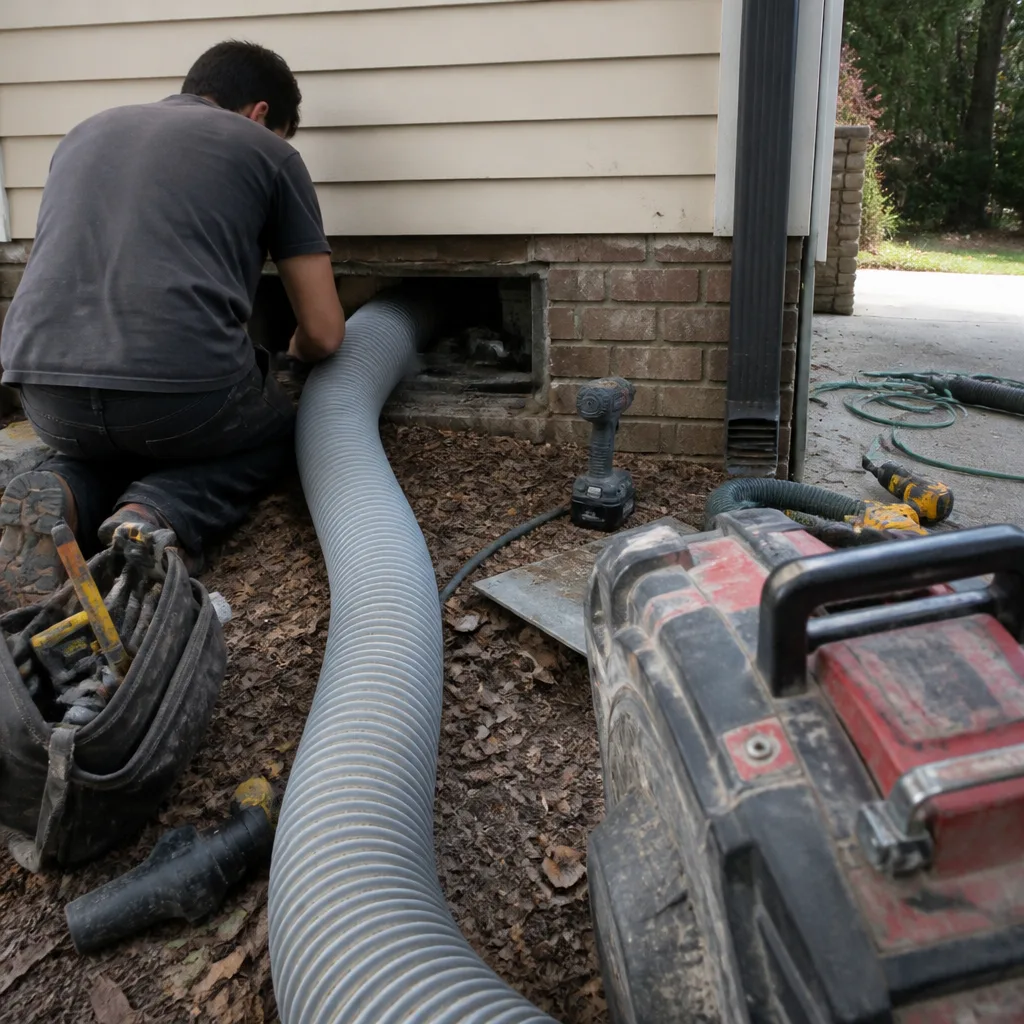 Before
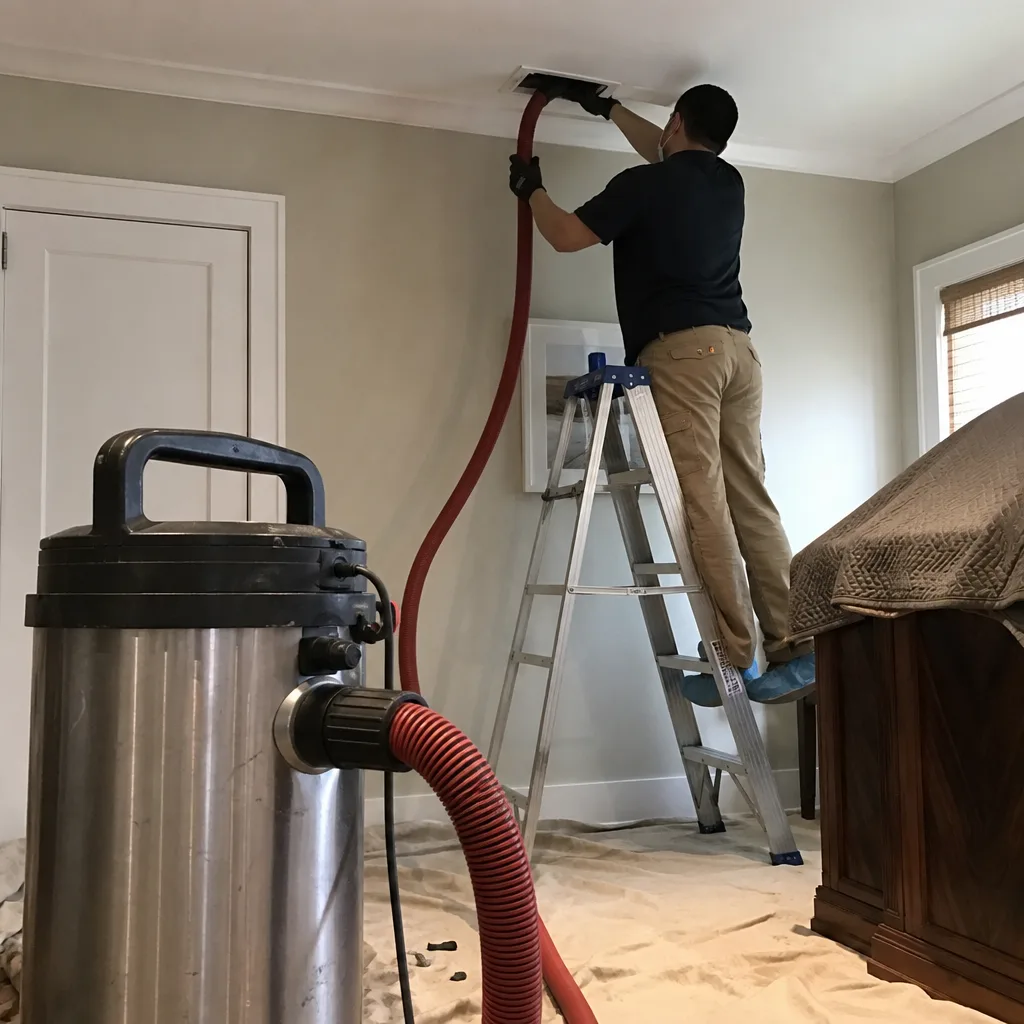 After
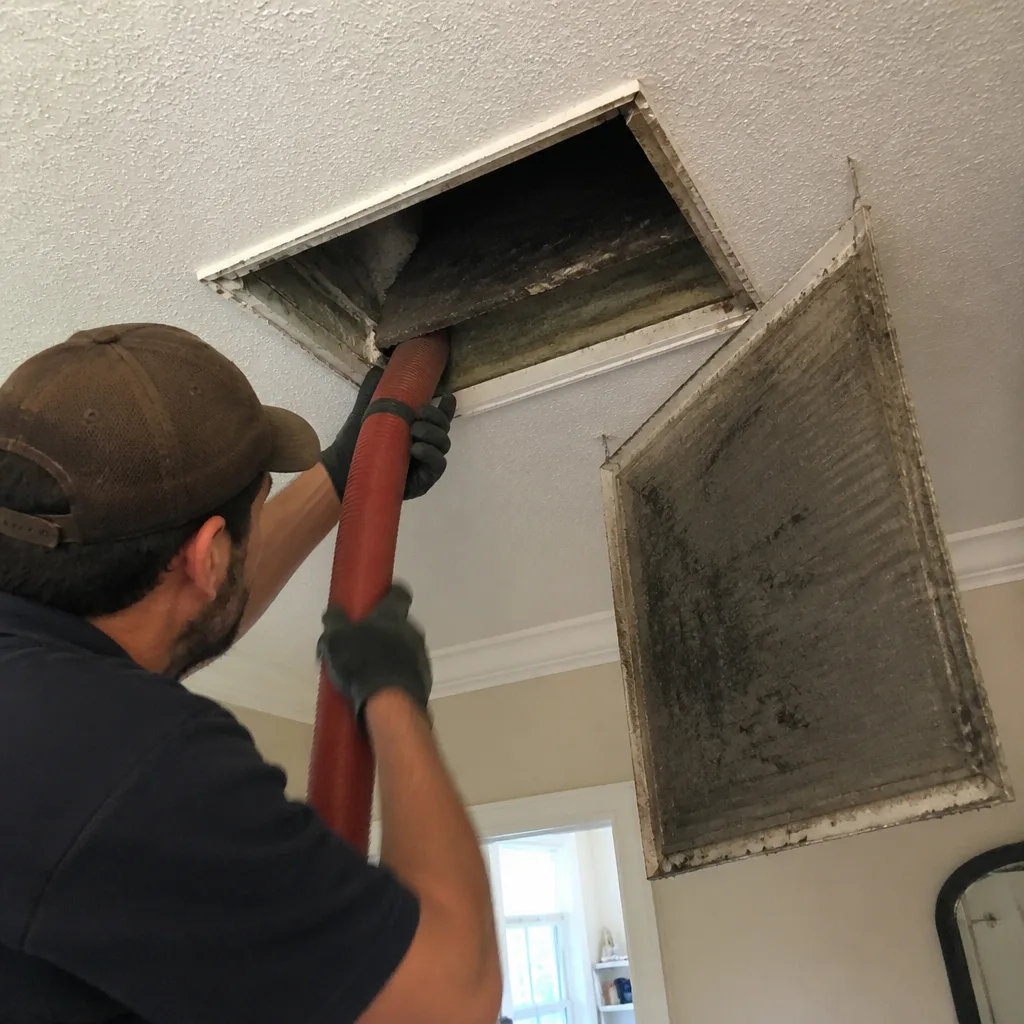 Before
 After
 Before
 After
When to Call a Professional
Call a professional when you see dust discharging from registers at startup, when rooms heat or cool unevenly, when the system smells stale or musty, when you find construction debris in the register boots, or when it’s been five years or more since the last legitimate cleaning. These conditions sit beyond what homeowner tools can resolve. Hollis Air Duct Sandy Springs offers free estimates in Sandy Springs, and every job is covered by the 365-Day Done Right Promise: if the work fails within a year, we return and make it right at no charge, including a free second visit. Call (229) 489-7780 and you’ll speak to a live person who can schedule the conversation.
Frequently Asked Questions
Professional air duct cleaning in Sandy Springs typically costs $350 to $750 for a full home, depending on the number of supply branches, the number of return drops, the accessibility of the air handler, and whether dryer vent cleaning or duct sealing is added. A single system up to 1,800 square feet usually falls between $350 and $500, while a larger home with multiple returns and a second system can reach $650 to $750. The price should be written down before any work starts, and it should include the full system, not a per-vent rate that grows at the door. Call (229) 489-7780 for an exact quote on your home, estimates are free.
A shop vacuum can clean the visible inside of a register boot and perhaps the first 18 to 24 inches of a branch line, but it cannot reach the trunk or most of the branch system, and its CFM rating is far too low to pull debris from 15 to 40 feet away. The result is surface-level cleaning at the registers with the majority of the system untouched. If you clean registers and boots yourself, treat it as maintenance between professional visits, not as a replacement for one.
The lowest quotes in the Sandy Springs market usually come from companies that bait with a per-vent price, then find a reason to increase the total once the technician is inside. They may also skip the negative-pressure equipment, use only a brush on a drill, and skip the documentation. A legitimate professional cleaning carries equipment costs, insurance, background-checked labor, and a written guarantee, which lands the price in the $350 to $750 range for most homes. If a quote is dramatically below that, ask what’s included and whether the total is written down before work begins.
Ask for photographic documentation from inside the duct system, before and after, taken with a camera inspection tool. A legitimate company will show you the interior surfaces of the trunk and branch lines before work begins and after it’s complete, and the invoice will itemize what was cleaned and how. If a company declines to provide photos, that’s a red flag. A written before-and-after record also matters for home sale disclosure in Sandy Springs, where buyers ask about HVAC condition.
Most Sandy Springs homes benefit from professional cleaning every 4 to 7 years, depending on renovation history, pets, allergens, and whether the household includes smokers or occupants with respiratory conditions. Homes with major renovation dust, water intrusion, or pest activity may need it sooner. Between cleanings, register cleaning twice a year and filter replacement every 30 to 90 days keep the system in good condition and extend the interval between professional visits.
It can, if the DIY attempt damages ductwork, cuts improper access holes, or leaves the system in worse condition, because most manufacturer warranties require work to be performed by qualified service providers and proper documentation of maintenance. A professional cleaning with a written invoice and photographic record supports your warranty position. Before cutting any holes or modifying ductwork yourself, check your system’s warranty terms and ask whether the attempted work is covered. If you’re not sure, call (229) 489-7780 for guidance.
The Bottom Line
The DIY versus professional duct cleaning question isn’t really about effort, and it isn’t about saving money. It’s about equipment physics. A brush and shop vacuum can clean what you can see at the register, and that’s genuinely worth doing twice a year. But a branched duct system running through a hot Georgia attic holds contamination in places no homeowner tool can reach or remove. Professional negative-pressure source removal exists because that’s the only method that dislodges and captures what’s actually in the trunks. For most Sandy Springs homes, the honest answer is both: do the register maintenance yourself, and leave the system cleaning to equipment that can finish the job.
Written by Roy Castellanos, Owner at Hollis Air Duct Sandy Springs, serving Sandy Springs since 2004.