
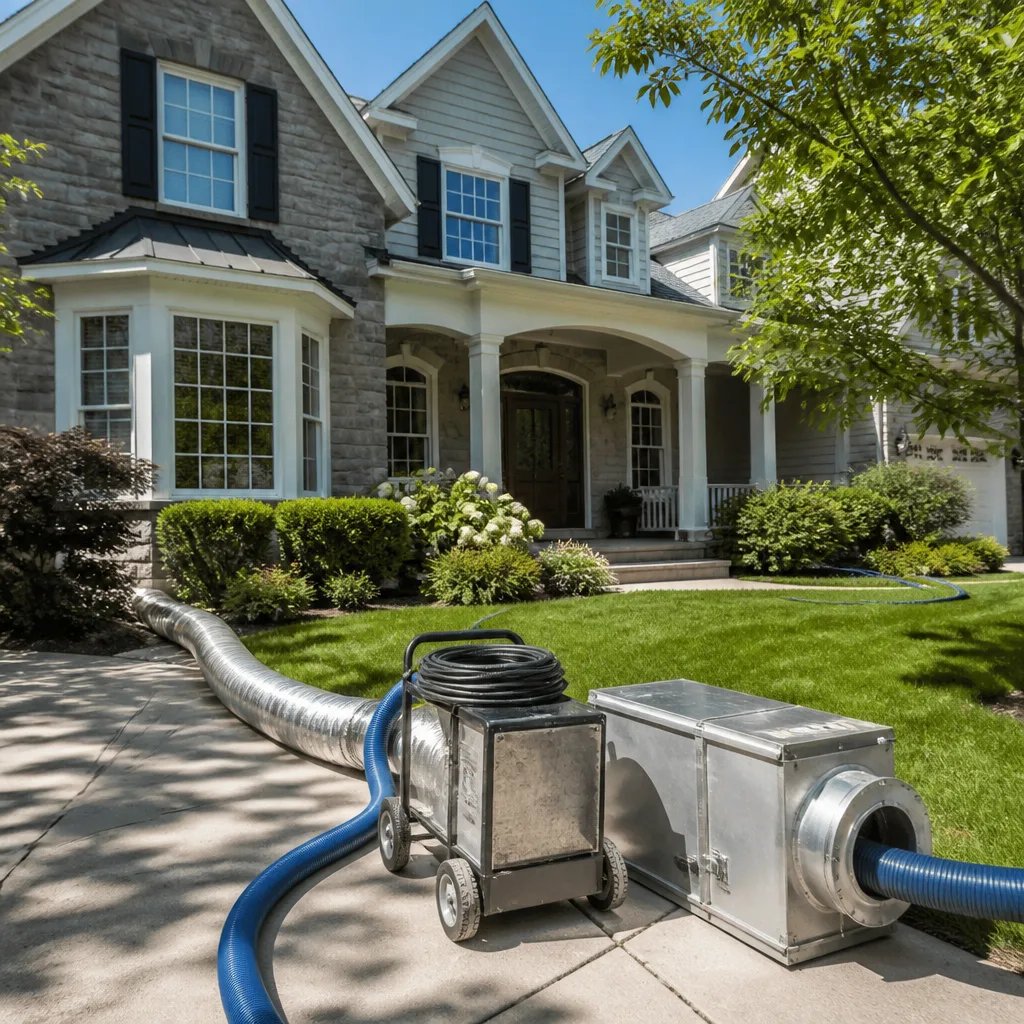
Last updated October 15, 2026
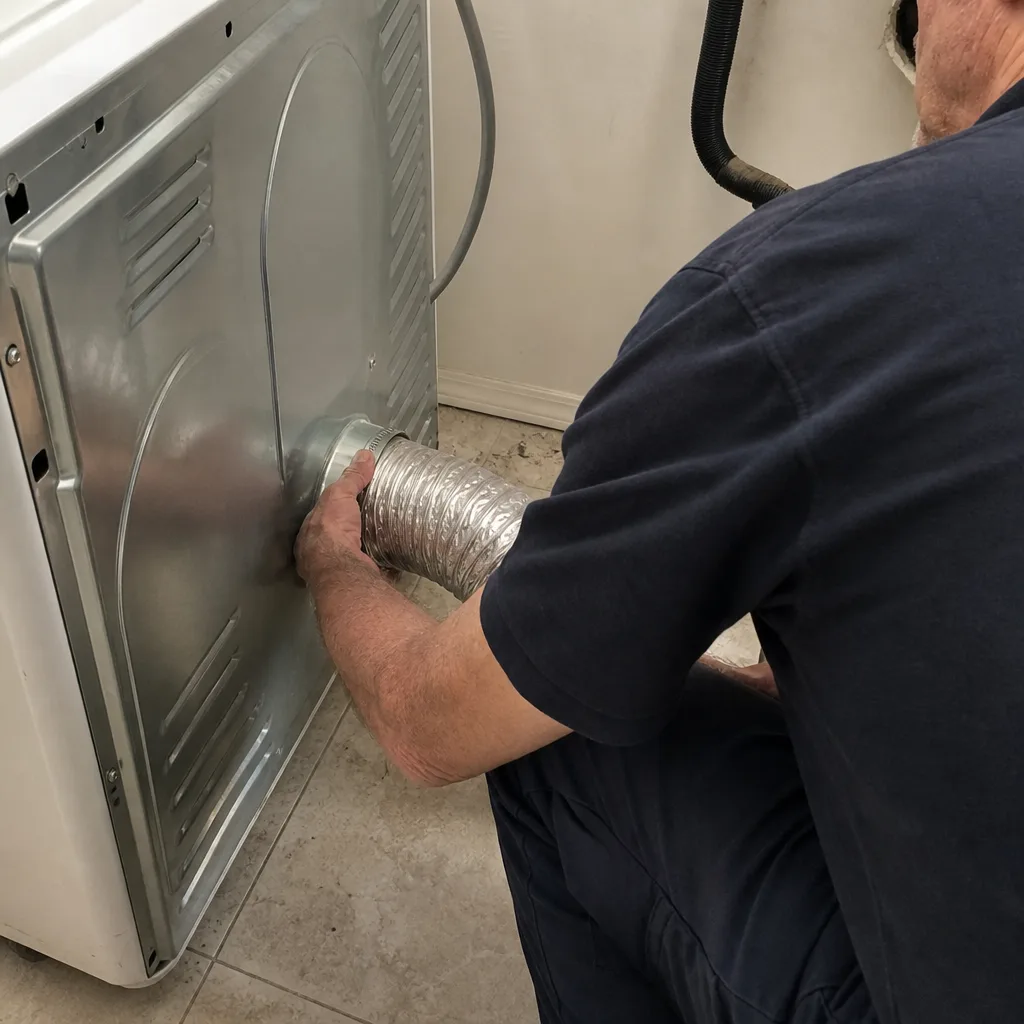
 Whole-home duct cleaning
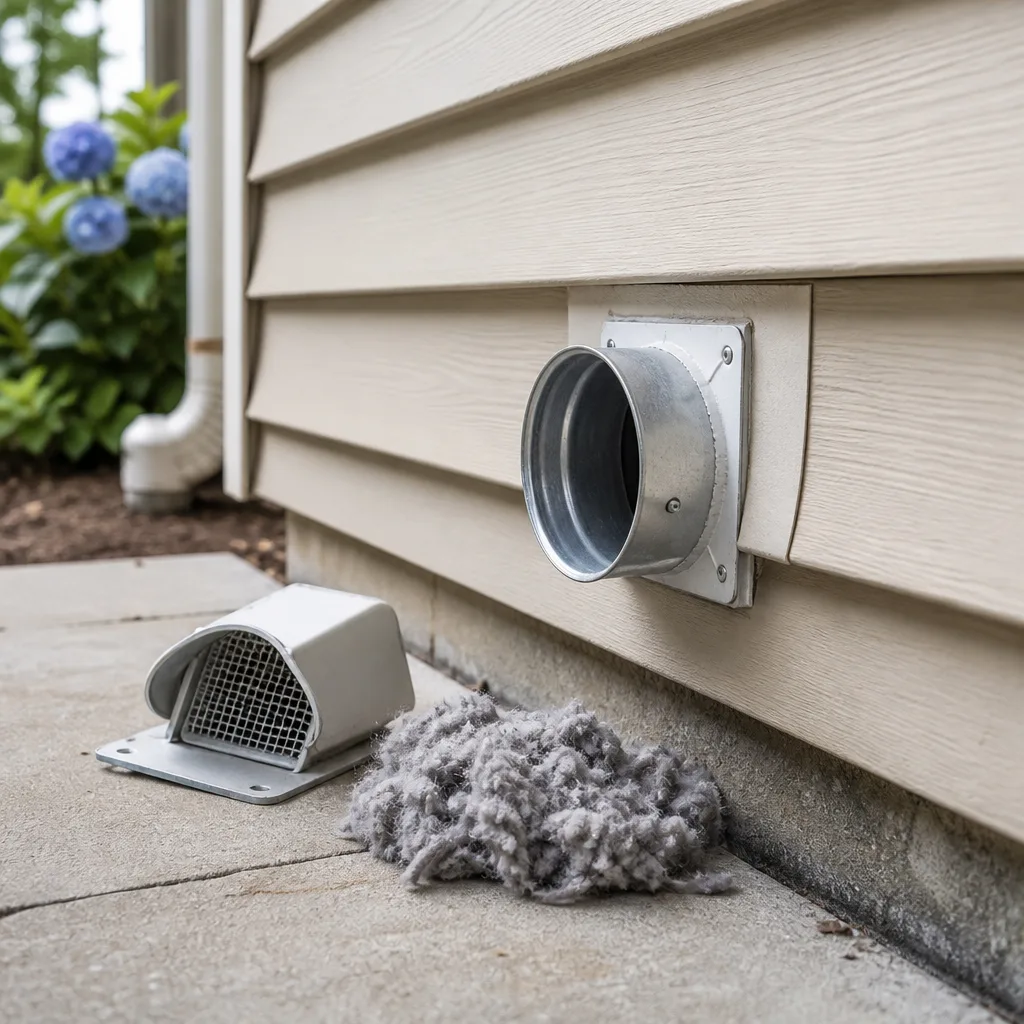 Dryer vent cleaning
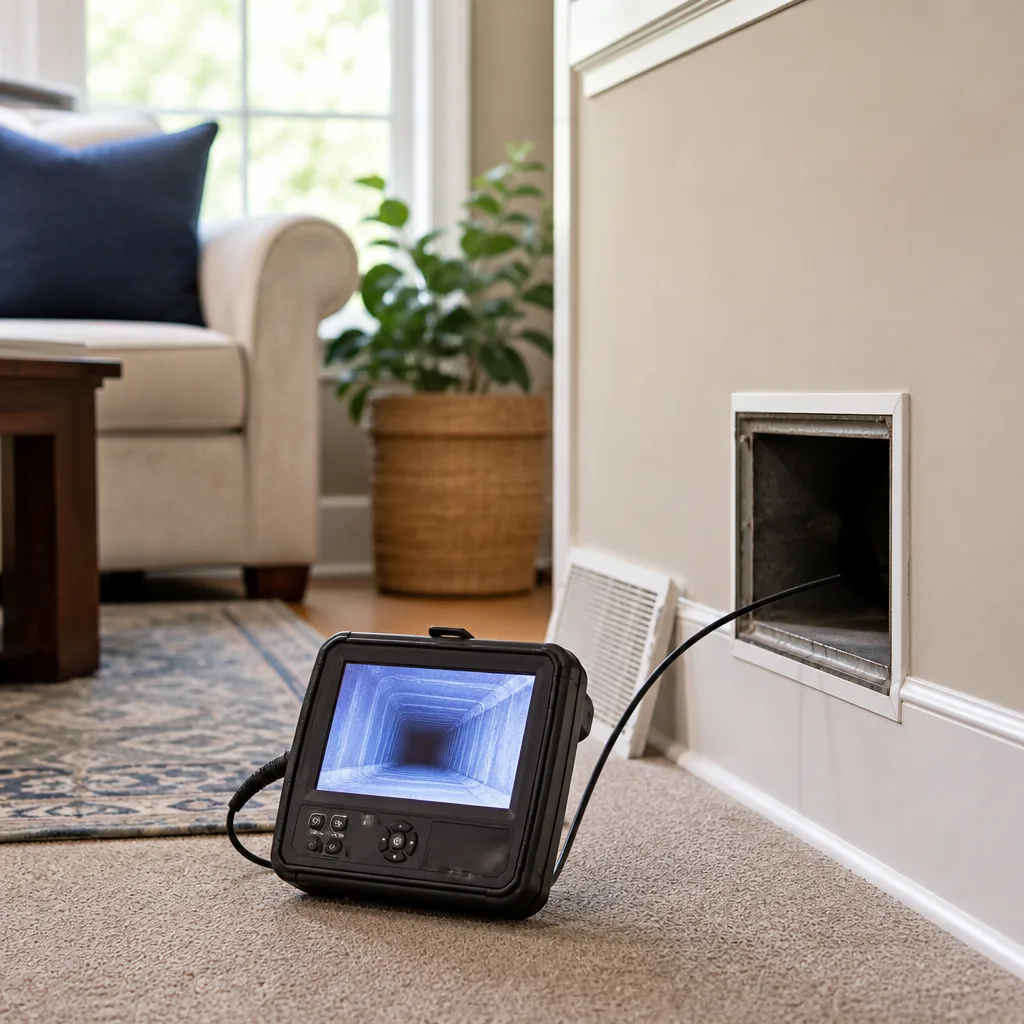 Camera inspection
 Sanitizing & deodorizing
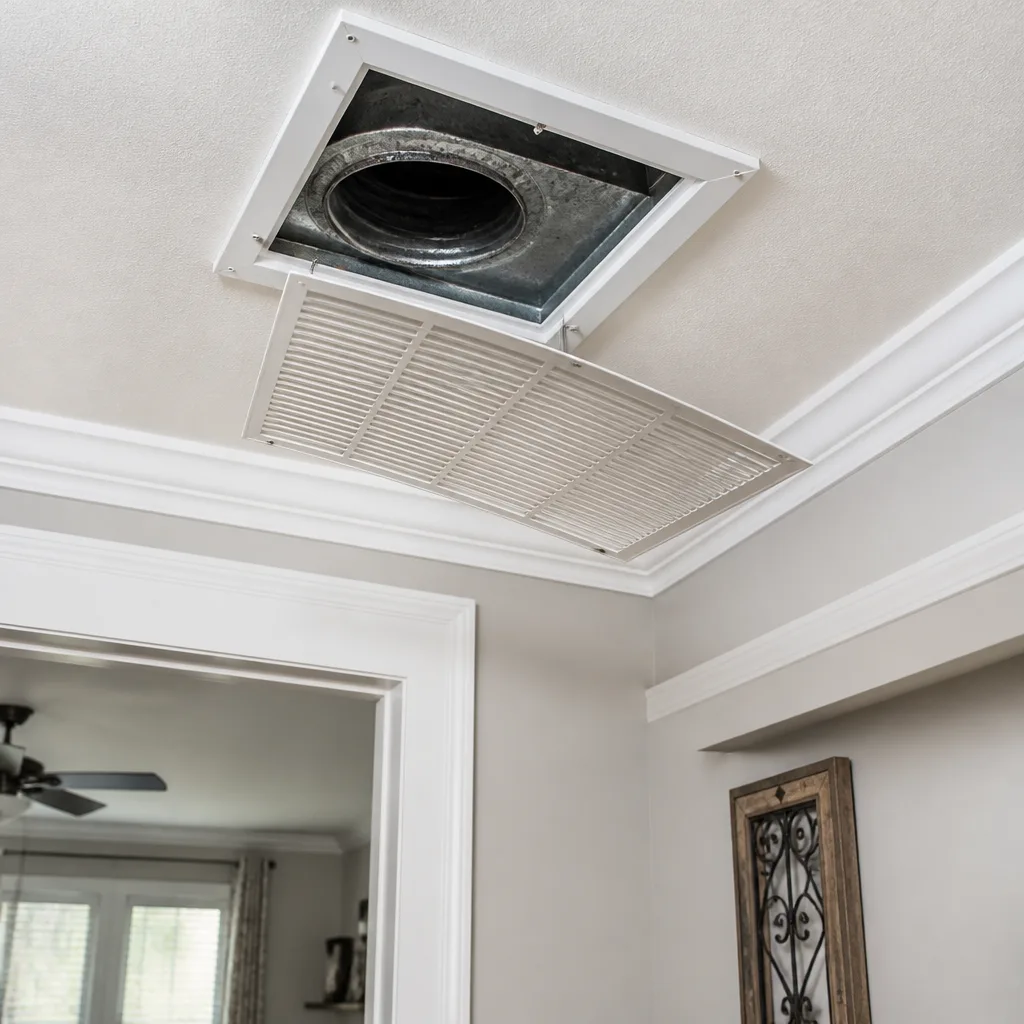
Whole-system duct and dryer vent check with before-and-after photos - you see exactly what came out of your vents
That "$99 whole-house special" is a bait ad - the real number appears once they are in your hallway, or the "clean" is a shop-vac at the register. We photograph the inside of your ducts before and after instead.
Air Duct Cleaning Permits, Codes & Inspections in GA: What You Need to Know
Here’s something most Georgia homeowners never hear until it’s too late: the state has no license specific to air duct cleaning. Anyone with a van and a shop vac can print business cards and start knocking on doors in Sandy Springs. That’s legal. But the moment that person cuts into your ductwork, applies a chemical treatment, or replaces a register box, they’ve crossed into regulated territory without most homeowners realizing it. This guide will walk you through exactly where that line sits under Georgia law, what Fulton County and Sandy Springs expect, and the documents you should ask for before anyone touches your system. For a deeper look at the service itself, see our Air Duct Cleaning overview.
Quick Answer
Routine air duct cleaning in Georgia does not require a permit, and there is no state-issued air duct cleaning license. However, when duct cleaning includes cutting into ductwork, replacing components, or applying EPA-registered antimicrobial chemicals, mechanical permits and licensed HVAC contractors can be triggered. Homeowners should verify general liability insurance, ask about chemical disclosure before any treatment, and check their HVAC manufacturer’s warranty language before booking.
Styles & brands we work with
Table of Contents
- Georgia’s Contractor Licensing Structure: What Actually Covers Duct Work
- When Mechanical Permits Are Triggered Versus When They Are Not
- EPA-Registered Antimicrobial Treatments: What Disclosure You Should Expect
- What Fulton County and Sandy Springs Require When Duct Modifications Happen
- HVAC Manufacturer Warranties: The ‘Authorized Service’ Gap
- The Insurance Documents Every Homeowner Should Request
- Why Sandy Springs Air Quality Makes Verification More Important
- Common Mistakes to Avoid
- When to Call a Professional
- Frequently Asked Questions
Georgia’s Contractor Licensing Structure: What Actually Covers Duct Work
Georgia licenses contractors through the State Licensing Board for Residential and General Contractors. That board covers general contractors, residential builders, and a handful of specialty trades. Air duct cleaning is not one of them. Neither is dryer vent cleaning. The trade exists in a regulatory gap that surprises a lot of Sandy Springs homeowners who assume every person working in their home holds some kind of state credential.
What does exist is the HVAC contractor license issued by the Georgia Construction Industry Licensing Board, Division of Conditioned Air Contractors. That license is required for anyone who installs, repairs, or modifies conditioned air systems. The distinction matters because a routine duct cleaning does not count as installation, repair, or modification. The technician is removing debris, not changing the system. But the moment a repair or modification enters the picture, the licensing requirement snaps into place.
Here’s the practical breakdown:
- Routine duct cleaning: No state license required, no permit required. This includes negative-air extraction, rotary brush systems, and basic debris removal.
- Duct sealing with mastic or aerosol sealant: This is a modification. Georgia considers sealing a conditioned air system alteration, and it should be performed by a licensed conditioned air contractor.
- Cutting access holes into ductwork: Technically a modification. If the cleaning requires cutting into the duct to reach a blockage, the person doing that work should hold a conditioned air license.
- Replacing a damaged duct section or register box: This is repair work. It requires a licensed contractor and may trigger a mechanical permit depending on the scope.
- Applying antimicrobial chemicals inside ducts: The application itself is not a licensing issue, but the chemicals are regulated at the federal level, which we’ll get into below.
We’ve cleaned thousands of systems in Sandy Springs, and we see the same pattern over and over: a homeowner books a cheap cleaning, the technician discovers a torn flex duct or a disconnected register boot, offers to “patch it up” while he’s there, and the homeowner never learns that an unlicensed modification just voided their HVAC warranty. The cleaning itself is legal. The “quick fix” that follows often isn’t.
When Mechanical Permits Are Triggered Versus When They Are Not
This is the section that answers the question most competitors’ pages completely skip. A mechanical permit in Georgia covers work on heating, cooling, and ventilation systems. The threshold is scope-based, not price-based. A $50,000 duct cleaning job that only removes debris needs no permit. A $200 repair that replaces a rigid duct elbow might.
Here’s a step-by-step look at how the permit line works in practice:
- Debris removal only: No permit. The work is classified as maintenance, not construction or modification.
- Duct sealing that fills gaps with mastic: Generally no permit in Sandy Springs if the sealing is incidental to cleaning and does not alter the system design. This is a gray area, and different inspectors interpret it differently.
- Replacing flexible duct runs: No permit typically required for a direct replacement of the same size and length. The work should still be done by a licensed contractor.
- Adding new runs, moving registers, or changing duct diameter: This is system alteration. Fulton County requires a mechanical permit. No exceptions.
- Installing a new return or supply plenum: Permit required. This changes airflow dynamics and falls squarely under construction.
Fulton County’s Development Services Department issues mechanical permits for unincorporated areas and for cities that contract with the county. Sandy Springs operates its own Community Development Department and issues permits through the city directly. The Sandy Springs permit office’s stated scope for mechanical permits includes “installation, alteration, or replacement of any heating, ventilation, or air conditioning system.” The phrase “alteration” is the one that catches duct work modifications.
What homeowners in Sandy Springs should know: if your duct cleaning company offers to “add a return” or “fix that airflow problem by re-routing this branch,” you’re now in permit territory. A legitimate company will tell you that and will either pull the permit or partner with a licensed HVAC contractor who can. A company that waves it off with “you don’t need a permit for that” is either uninformed or avoiding the cost of compliance, and neither one is a good sign.
EPA-Registered Antimicrobial Treatments: What Disclosure You Should Expect
Many duct cleaning companies upsell antimicrobial fogging or sanitizing treatments. When we run them as part of a Air Duct Cleaning in Sandy Springs job, we use products registered under FIFRA, the Federal Insecticide, Fungicide, and Rodenticide Act. Here’s what that registration actually means and what the EPA requires of anyone applying these products inside your ducts.
Any product marketed as killing mold, bacteria, or fungi inside a duct system must carry an EPA registration number. That number signals the product’s label has gone through efficacy and safety review. The label is a legal document, not marketing copy. Using a product in a way that contradicts its label, applying it at a higher concentration than the label allows, or making claims the label does not support is a violation of federal law.
What should a homeowner expect before any chemical treatment goes into their ducts?
- Product name and EPA registration number: You have a right to know exactly what chemical is being applied. Ask for the label or a photo of it.
- Label-reviewed application method: The EPA label specifies how the product may be applied. Some products are approved for fogging, some for direct surface application, and some are not approved for use inside ductwork at all.
- Dwell time and re-occupancy guidance: Most products require a period during which the home should be vacant or the system should not run. That information is on the label, and the company should communicate it clearly.
- Material safety data sheet availability: If anyone in the home has respiratory conditions, chemical sensitivities, or is immunocompromised, you should be able to review the MSDS before agreeing to the treatment.
- Written confirmation of what was applied: The company should leave documentation of the product, the EPA registration number, the date, and the location of application.
We apply EPA-registered products from manufacturers including Abatement Technologies on select jobs, and we walk through the product name, label instructions, and re-occupancy window before anything is applied. If a company refuses to tell you what chemical they are putting in your air stream, that is a red flag with no gray area.
What Fulton County and Sandy Springs Require When Duct Modifications Happen
Sandy Springs is one of the few cities in metro Atlanta that runs its own permitting and inspection operation instead of deferring entirely to Fulton County. That matters because the city’s inspectors review mechanical work against the Georgia State Minimum Standard codes, which incorporate the International Mechanical Code and International Residential Code. Those codes govern duct construction, support, insulation, and sealing standards.
Here’s what the codes require that most homeowners never see:
- Duct support spacing: Flexible duct must be supported at intervals specified by the manufacturer, typically every 4 to 5 feet, with no sag between supports greater than half an inch per foot.
- Sealant on all joints and seams: The energy code requires duct joints and seams to be sealed with mastic, approved tape, or an aerosol sealant system. Duct tape, the gray fabric stuff from the hardware store, does not meet code in Sandy Springs for duct sealing.
- Insulation requirements in unconditioned spaces: Any duct run in an attic or crawl space must be insulated to R-8 in most cases. Uninsulated metal duct in a Sandy Springs attic will sweat in summer and can become a mold source.
- Access for cleaning and inspection: The code assumes ducts will be cleaned and inspected at some point. Permanent access doors or removable panels should exist where needed.
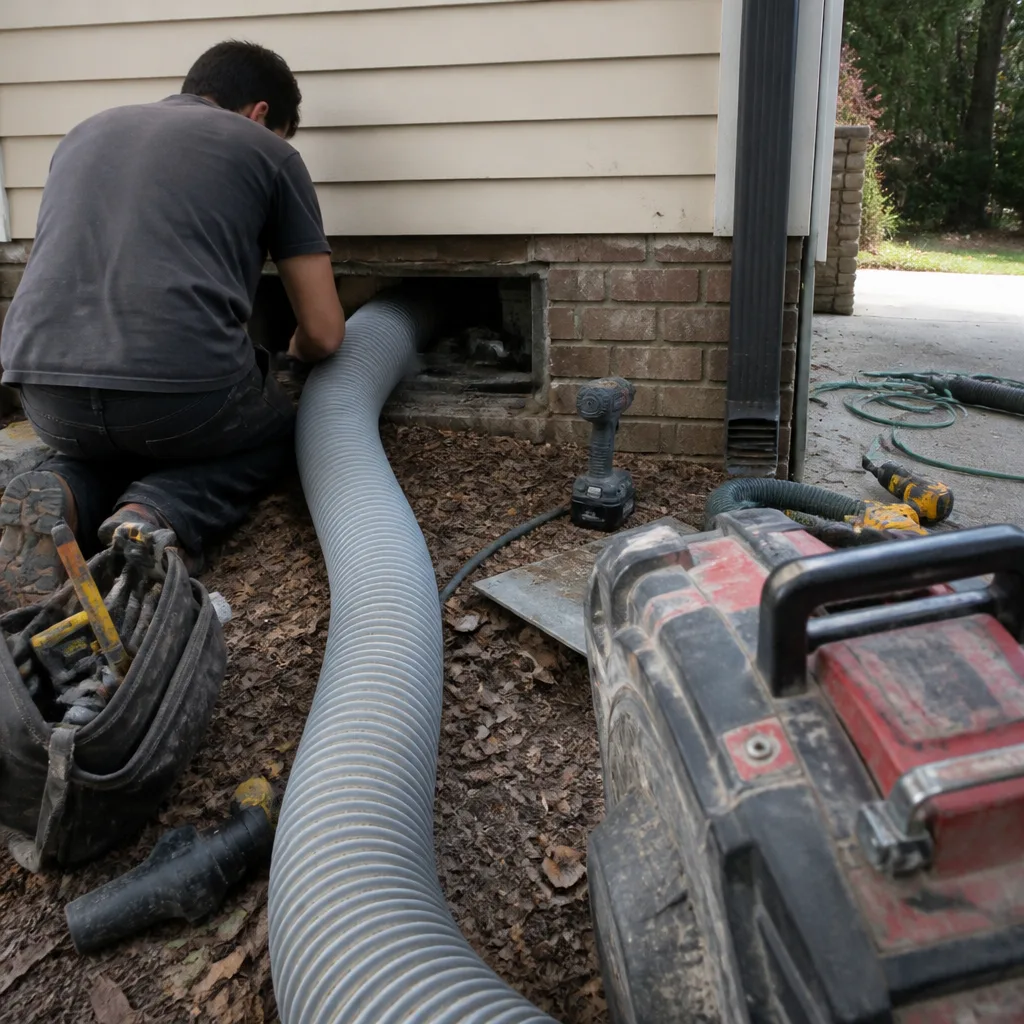
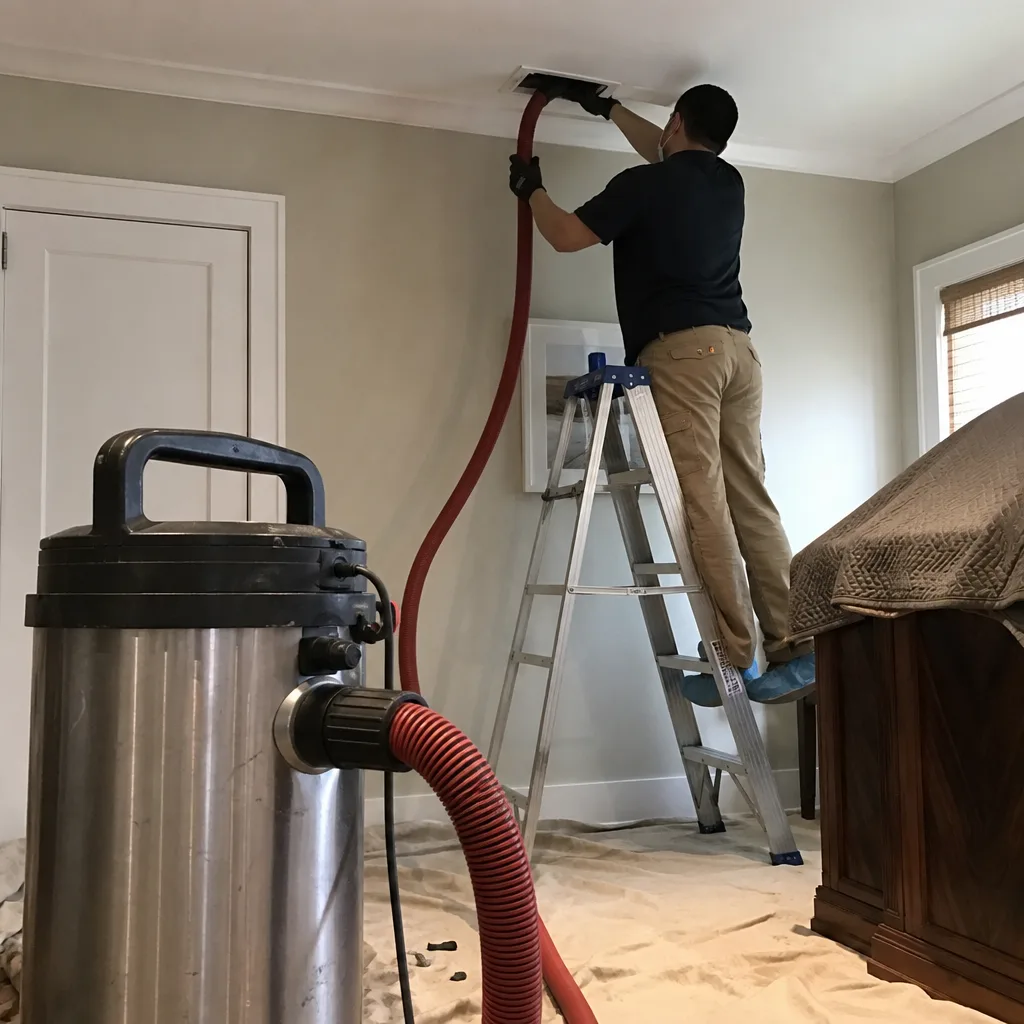
The pragmatic point for a Sandy Springs homeowner: if you’re having ducts cleaned and the technician needs to cut an access hole, that hole has to be closed and sealed to code. A company that cuts a hole and covers it with a piece of sheet metal and tape has just left you with a non-compliant repair that an inspector will flag and that will leak conditioned air into your attic. We use professional-grade equipment from Rotobrush and Nikro that accesses the duct through existing openings in most cases, which avoids the modification issue altogether.
If your job does include modifications, the Sandy Springs inspection process is straightforward: the permit is pulled, the work is done, the inspector schedules a time to review the installation, and a final sign-off is issued. A company that can’t tell you whether your job needs a permit is not a company you want doing the work.
HVAC Manufacturer Warranties: The ‘Authorized Service’ Gap
Your HVAC system came with a manufacturer’s warranty, usually 5 to 10 years on parts and sometimes longer on the heat exchanger or compressor if you registered the unit. Buried in the warranty language of every major brand including Trane, Carrier, Lennox, and Goodman is a clause about who may perform service. The wording varies, but the standard language says the warranty covers defects in materials and workmanship under normal use and proper maintenance, and that repairs must be performed by a qualified service technician.
“Qualified” is where duct cleaning companies can create a problem without the homeowner realizing it. Here’s the chain of events we see in Sandy Springs:
- A homeowner books a low-cost duct cleaning.
- The technician finds a damaged flex duct, a crushed return, or a disconnected boot, and offers to fix it on the spot.
- The technician is not a licensed conditioned air contractor, so the repair is undocumented and potentially non-compliant.
- Six months later, the HVAC system fails. The homeowner files a warranty claim.
- The manufacturer’s inspector notes the unpermitted, unlicensed repair. The claim is denied because the system was altered by an unauthorized party.
That denial is not hypothetical. It is one of the most common warranty disputes in the metro Atlanta market. The homeowner’s response is usually “but the duct cleaning company said they could fix it.” The manufacturer’s response is that the warranty is between the manufacturer and the owner, and the owner bears responsibility for who touches the system.
The takeaway: routine duct cleaning alone, done properly, does not void a warranty. Cutting into ducts, replacing components, or applying chemicals without manufacturer approval can. Before anyone modifies your duct system, ask whether they hold a Georgia conditioned air license and whether the work will be documented in a way the manufacturer will accept.
The Insurance Documents Every Homeowner Should Request
Because Georgia lacks a licensing board specific to air duct cleaning, insurance is the backstop. A certificate of insurance, often called a COI, is the document that proves a company carries general liability and workers’ compensation coverage. Here’s what to request and why the details matter:
- General liability coverage: This protects your home if the company’s work damages your property. If a technician drops a tool through your ceiling or a rotor brush tears a duct liner, their liability policy should cover the repair. Without it, you’re filing a claim on your homeowner’s insurance or eating the cost.
- Workers’ compensation coverage: If a technician is injured in your home and the company does not carry workers’ comp, you may be liable for their medical costs. This is a real exposure, especially for attic and crawl space work in Sandy Springs where conditions are tight and hot.
- Certificate holder designation: The COI should list you as the certificate holder. That means the insurance company will notify you if the policy is cancelled or lapses before your job is complete. A COI that doesn’t name you as the certificate holder is less useful.
- Policy limits that match the job: For duct cleaning, $500,000 to $1,000,000 in general liability is standard. Anything less and you’re accepting risk that doesn’t need to be accepted.
We’re part of the Garrison Partners family, and every Hollis location carries the insurance required to work in Sandy Springs homes. We provide certificates on request before the job starts, with the homeowner named as certificate holder, because that’s what a disciplined operation does. Any company that hedges on an insurance request is telling you something useful about how they run their business.
Why Sandy Springs Air Quality Makes Verification More Important
Sandy Springs sits at the edge of the Chattahoochee River corridor, with a mix of older housing stock from the 1960s and 1970s and newer construction in neighborhoods like Dunwoody Panhandle, Riverside, and the stretch along Abernathy Road. The climate is humid subtropical. Summer dew points sit in the 70s. Attics can reach 130 degrees. That combination means ducts run through unconditioned attics are exposed to conditions that make the work described above either straightforward or genuinely risky depending on how it’s done.
Humidity is the variable. When warm, moist outside air leaks into a duct system through gaps, pinholes, or unsealed joints, the moisture condenses on cooler duct surfaces. That condensation becomes a substrate for microbial growth. A proper Duct Sealing in Sandy Springs job that closes those leaks is a real solution. A cleaning alone, without sealing, leaves the root cause in place.
Older Sandy Springs homes also tend to have a mix of original rigid metal duct and later-owner flex duct additions. The metal runs are often fine if they were sealed properly at installation. The flex runs are where we find the most issues: kinked, sagging, pulled loose from the boot, or chewed through by rodents that are common along the river corridor and the wooded lots in the northern half of the city.
None of that is a permit issue, but it is a verification issue. The person cleaning your ducts in Sandy Springs should know the difference between normal dust accumulation, which is expected, and moisture-driven contamination, which is a symptom of a system problem. That knowledge gap is where unlicensed, uninsured operators do the most damage.
Common Mistakes to Avoid
- Assuming a license exists that doesn’t: Homeowners often ask for an “air duct cleaning license in Georgia.” There isn’t one. Asking for it lets a disreputable company show you a business license and imply it’s a trade credential. Ask for insurance instead, and ask about conditioned air licensing if modifications are mentioned.
- Letting a cleaning technician make “minor” repairs on the spot: The cheapest repair in the moment is often the most expensive warranty denial later. Repairs should be done by a licensed conditioned air contractor with documentation.
- Approving chemical treatments without seeing the label: Ask for the EPA registration number and read the re-occupancy guidance before anyone fogs your ducts. If the company won’t provide it, decline the treatment.
- Not confirming who holds the permit: If your job in Sandy Springs does require a mechanical permit, the responsible party should be identified in writing. A company that says “we’ll handle it” but won’t produce a permit number is not handling it.
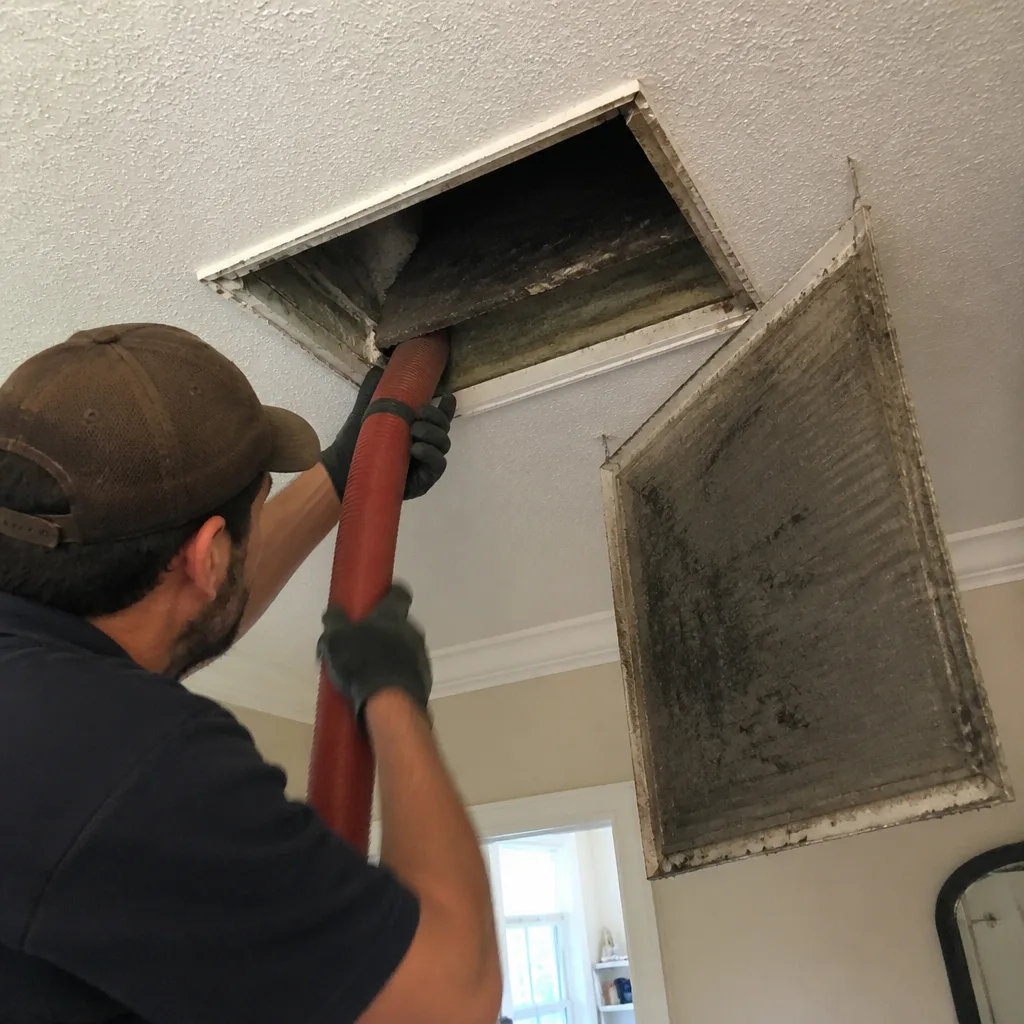
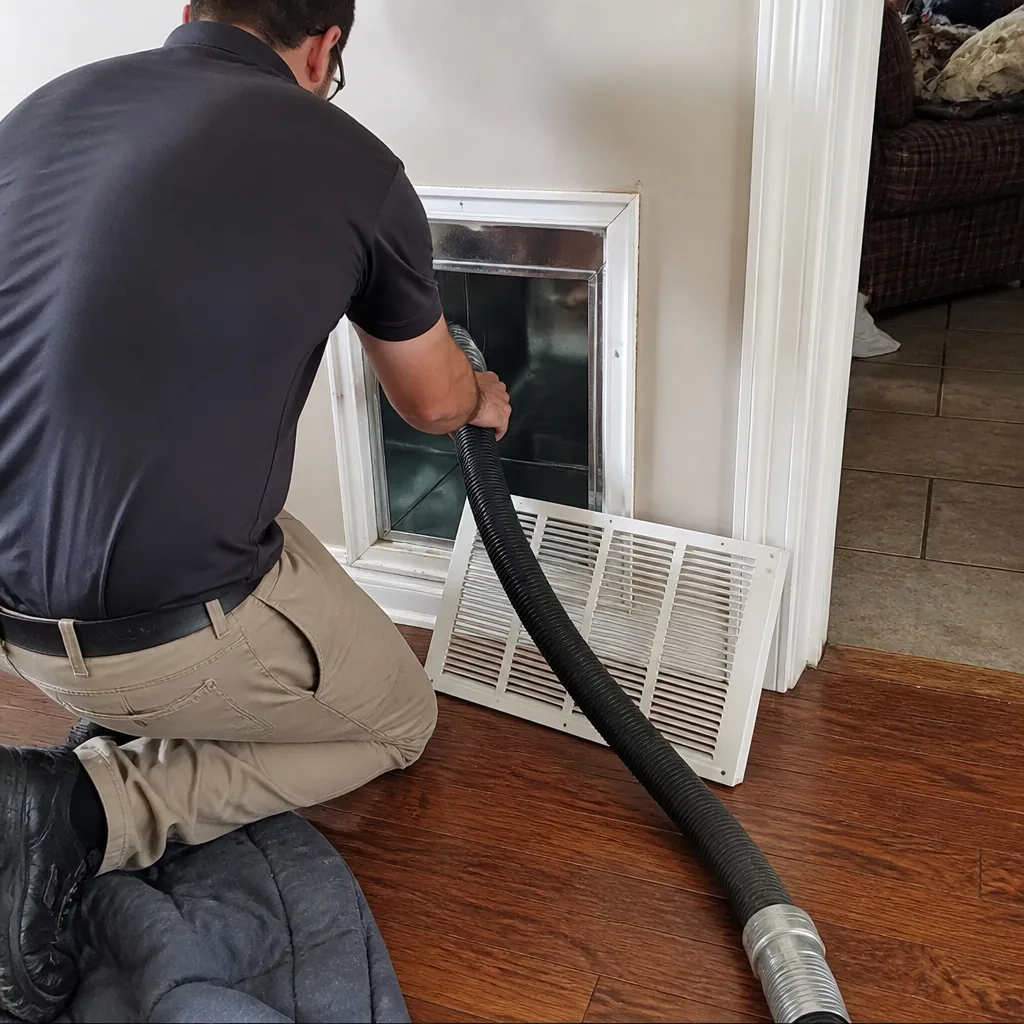
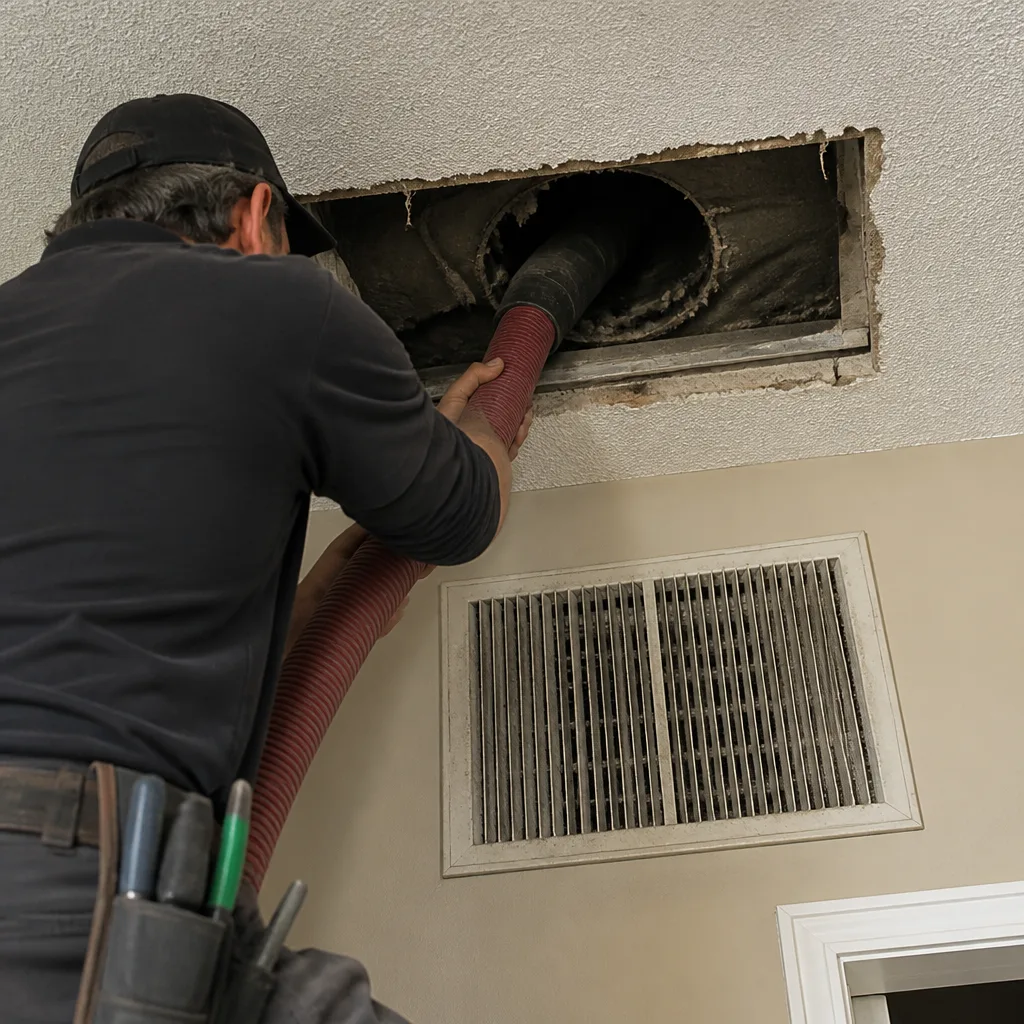
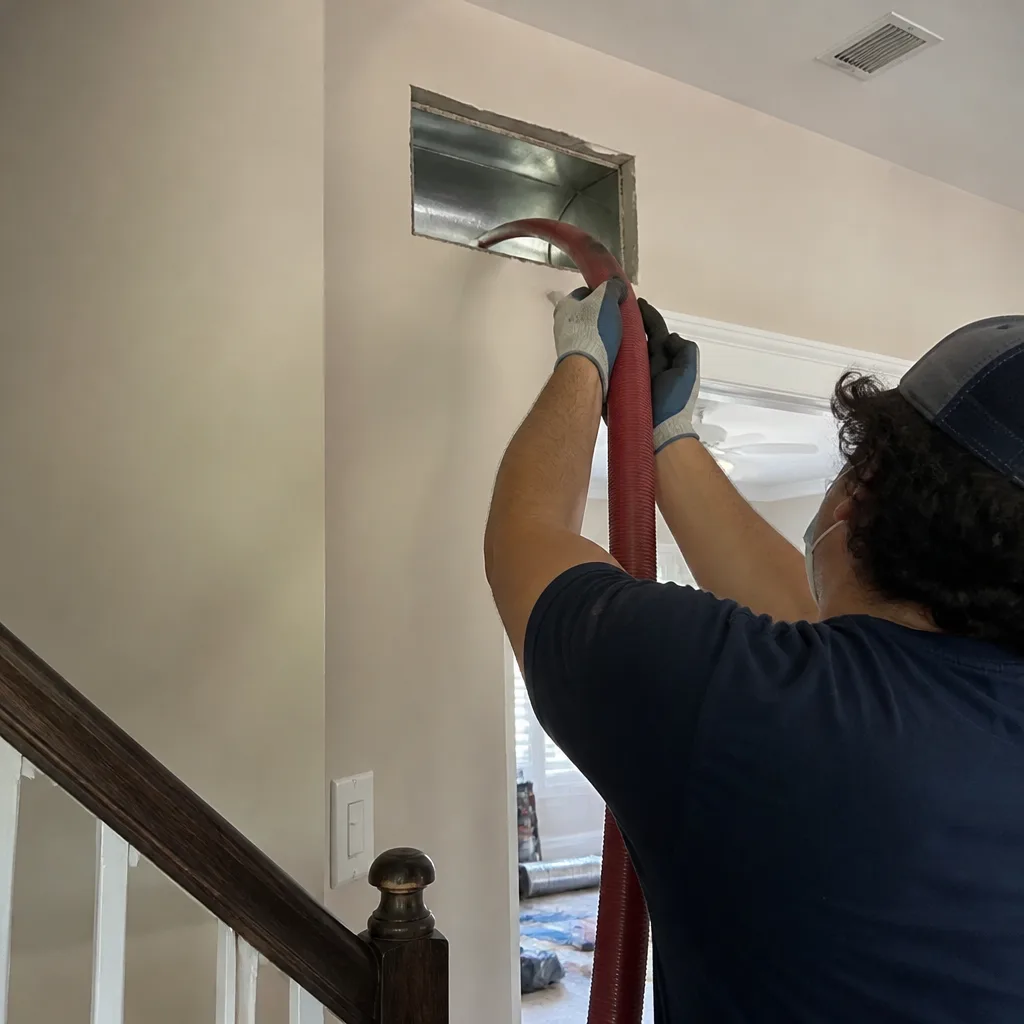
- Filing the paperwork but skipping the verification: Before-and-after photos of your own duct system are the minimum verification standard. If the company won’t provide them, you can’t confirm the work happened as described. We include before-and-after documentation on every job as part of our 365-Day Done Right Promise.
- Choosing the lowest bid without comparing scope: A $199 whole-house cleaning and a $450 whole-house cleaning are describing different jobs. One includes actual extraction equipment and labor. The other includes a shop vac and a prayer. Read the scope description, not just the price.
When to Call a Professional
Call a professional when the scope moves from cleaning into anything that affects system integrity. That means visible mold growth beyond light surface dust, ducts that have come apart or sag, airflow problems in specific rooms, water staining around registers, or any situation where a previous company’s work may have created a problem. Call when you want documentation: a written price, an itemized scope, before-and-after photos, and a guarantee in writing. In Sandy Springs, you can also call when you simply want to know whether your system needs attention at all. The Hollis Air Duct Sandy Springs home base has served the city since 2004, and we offer free estimates with honest assessments of what’s needed and what isn’t. Call (229) 489-7780 and we’ll walk through the scope before anyone touches a register.
Frequently Asked Questions
No. Routine air duct cleaning that only removes debris from existing ductwork does not require a permit anywhere in Georgia, including Sandy Springs. A permit may be required if the work involves cutting into ducts, changing duct sizing, adding runs, or replacing plenums. Call (229) 489-7780 for a straight answer on whether your specific job crosses that line.
No state license exists specifically for air duct cleaning in Georgia. The state licenses conditioned air contractors through the Division of Conditioned Air Contractors, and that license is required for repairs, modifications, and installations, but not for debris removal. That regulatory gap is why insurance verification and written guarantees carry more weight here than license numbers.
In Sandy Springs, whole-house air duct cleaning for a typical 2,500 to 3,500 square foot home generally runs between $450 and $800, depending on the number of systems, accessibility, and condition. Homes with significant contamination or multiple HVAC systems can exceed that range. Anyone quoting $199 for a full system is describing a different service than what the job actually requires.
Properly performed duct cleaning does not void an HVAC manufacturer’s warranty on its own. What voids warranties is unlicensed modification, undocumented repair, or the use of chemicals not approved for the system by the manufacturer. Ask whether the company documents their work in a way that would satisfy a manufacturer’s inspector if a claim is filed later.
The difference is almost always scope and equipment. A low quote typically covers a cursory vacuum of the register openings using equipment that cannot reach deep into the system, while a higher quote reflects negative-air machines, rotary brush systems from manufacturers like Rotobrush and Nikro, and labor to access the entire duct network. We price in writing before work starts to eliminate the upsell step, but the honest range in Sandy Springs is $450 to $800 for a real cleaning. Call (229) 489-7780 for a free estimate on your specific system.
Demand before-and-after photos of your own duct system, not stock images. A legitimate company will document the interior of the ducts before cleaning, after cleaning, and show the debris removed. We provide that documentation on every job and back it with the 365-Day Done Right Promise. If the company refuses photos, you should refuse to pay until you see what was done.
No permit is required for Dryer Vent Cleaning in Sandy Springs under any current Georgia or Fulton County code. The work is classified as maintenance. However, if the vent run itself needs to be replaced because it’s damaged, deteriorated, or made of an outdated material, that replacement can fall under mechanical code requirements depending on scope.
Ask for proof of general liability insurance with you named as certificate holder, ask whether the company uses negative-air or rotary brush equipment rather than a shop vac, request a written price before the work starts, and confirm that any chemical treatments include EPA registration disclosure. For Sandy Springs specifically, ask whether they’re familiar with the city’s permitting process if modifications are needed.
The Bottom Line
Air duct cleaning in Georgia operates in a regulatory gray zone. The cleaning itself is unlicensed and unpermitted, and that’s fine when the work stays within maintenance scope. But the moment a company crosses into modification, repair, or chemical treatment, the rules change, and homeowners who don’t know where the line sits are the ones who pay. Sandy Springs adds its own permitting layer through the city’s Community Development Department. The safest position is simple: verify insurance, require written pricing, demand documentation of the work, and know who holds the conditioned air license if anything beyond cleaning is proposed. We’ve operated under The Garrison Standard in Sandy Springs since 2004, and you can find more guides & resources on our blog. Written prices, written guarantees, and the 365-Day Done Right Promise on every job. If your ducts need attention, call (229) 489-7780 and we’ll tell you honestly what the job requires and what it will cost before anything starts.
Written by Roy Castellanos, Owner at Hollis Air Duct Sandy Springs, serving Sandy Springs since 2004.
See the difference
 Before
 After
 Before
 After
 Before
 After