
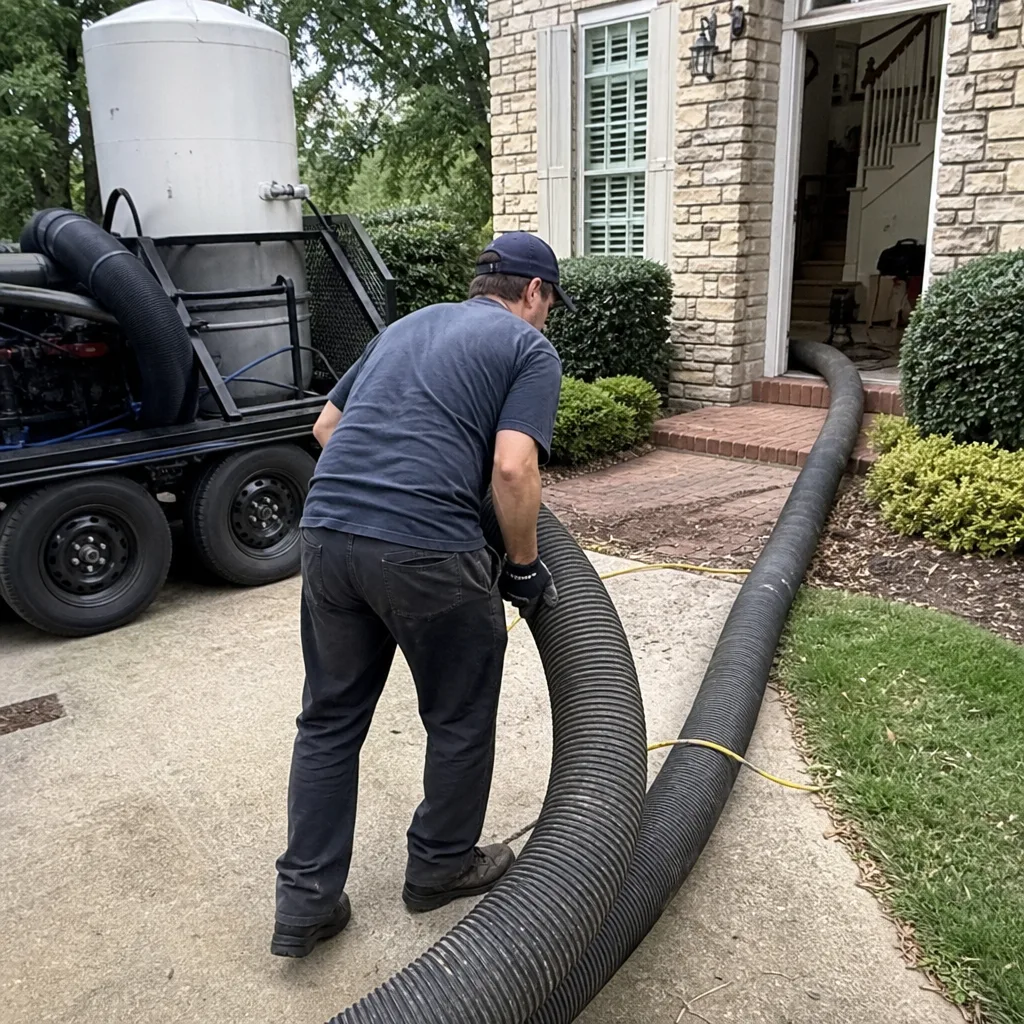
Last updated October 15, 2026
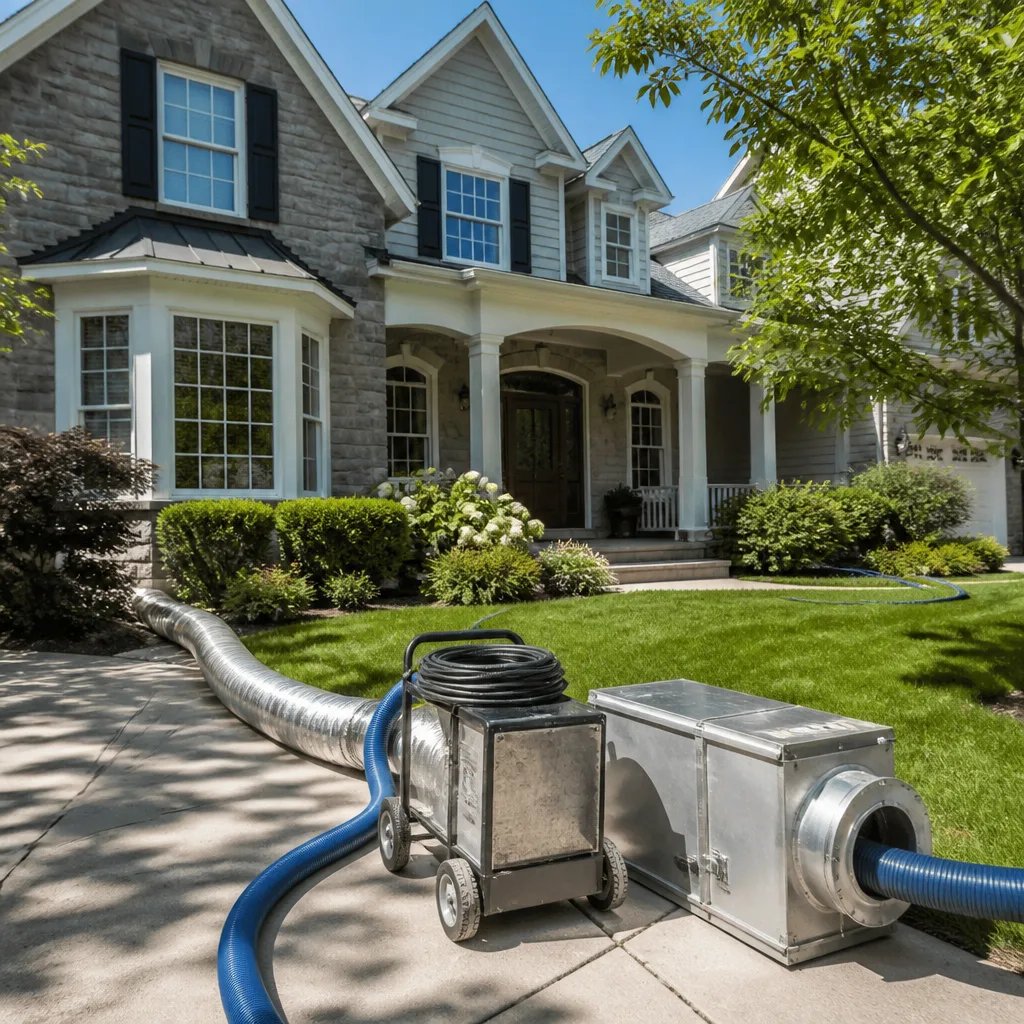 Whole-home duct cleaning
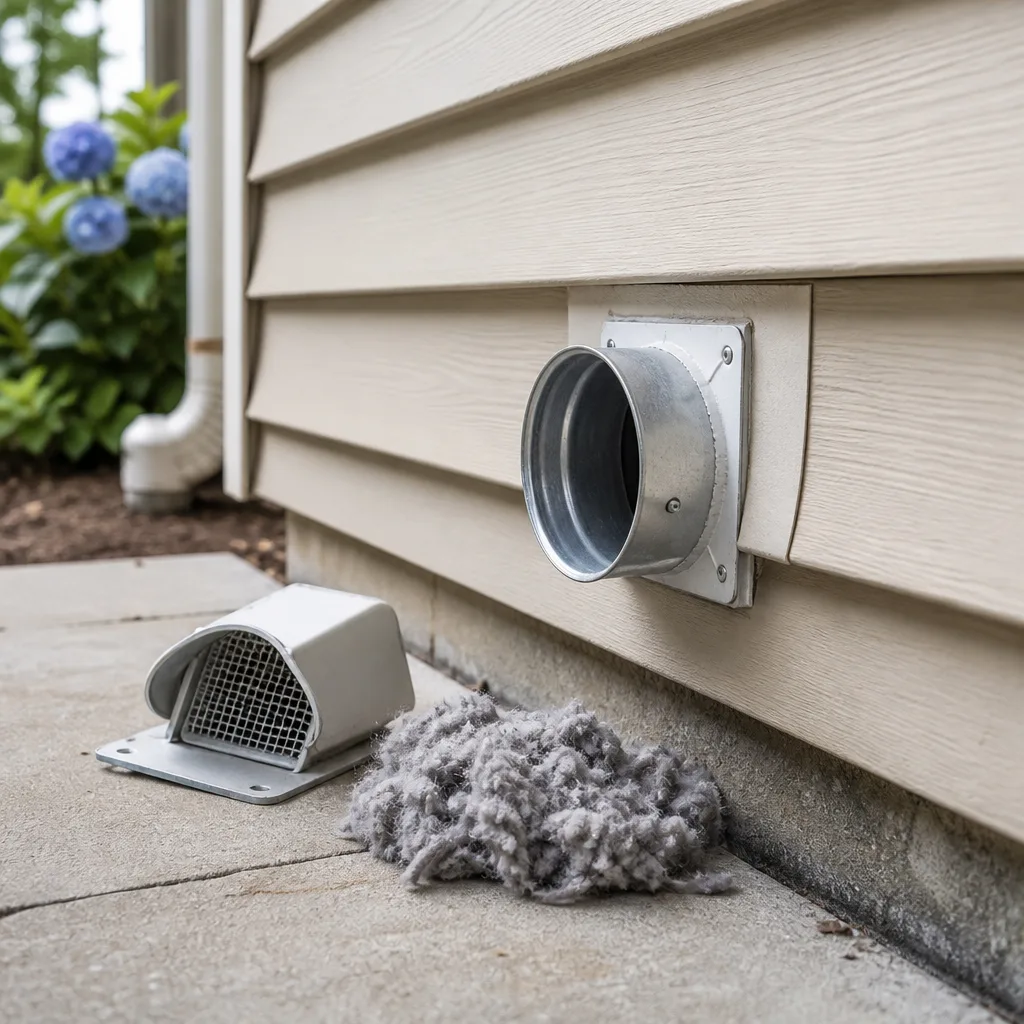 Dryer vent cleaning
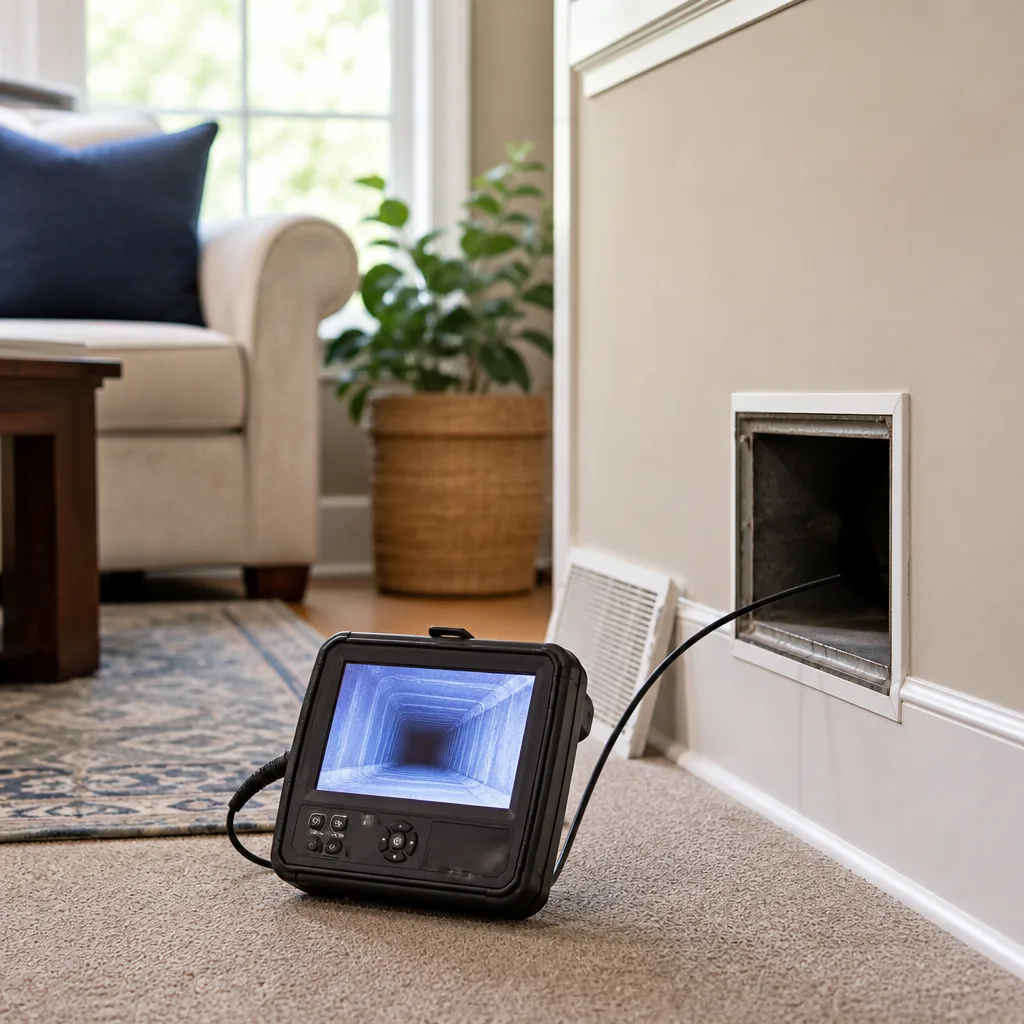 Camera inspection
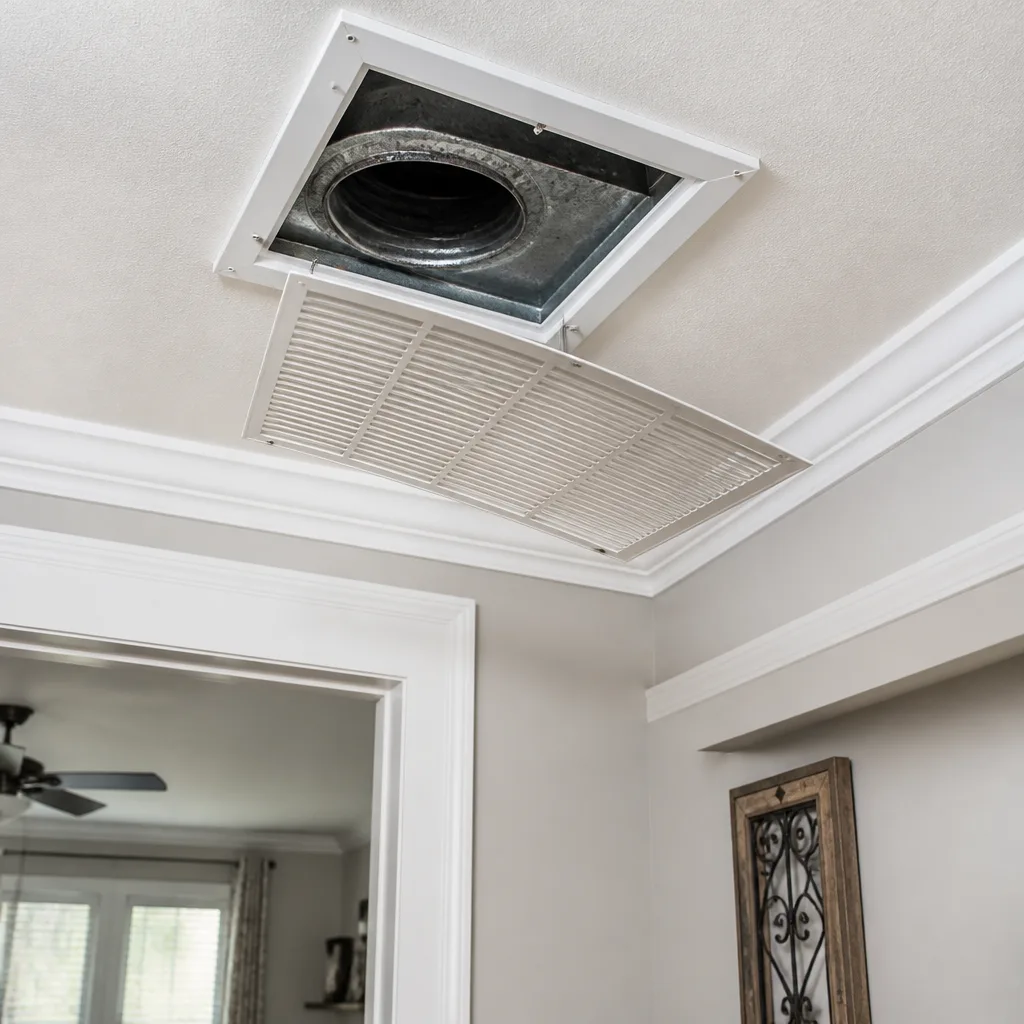 Sanitizing & deodorizing
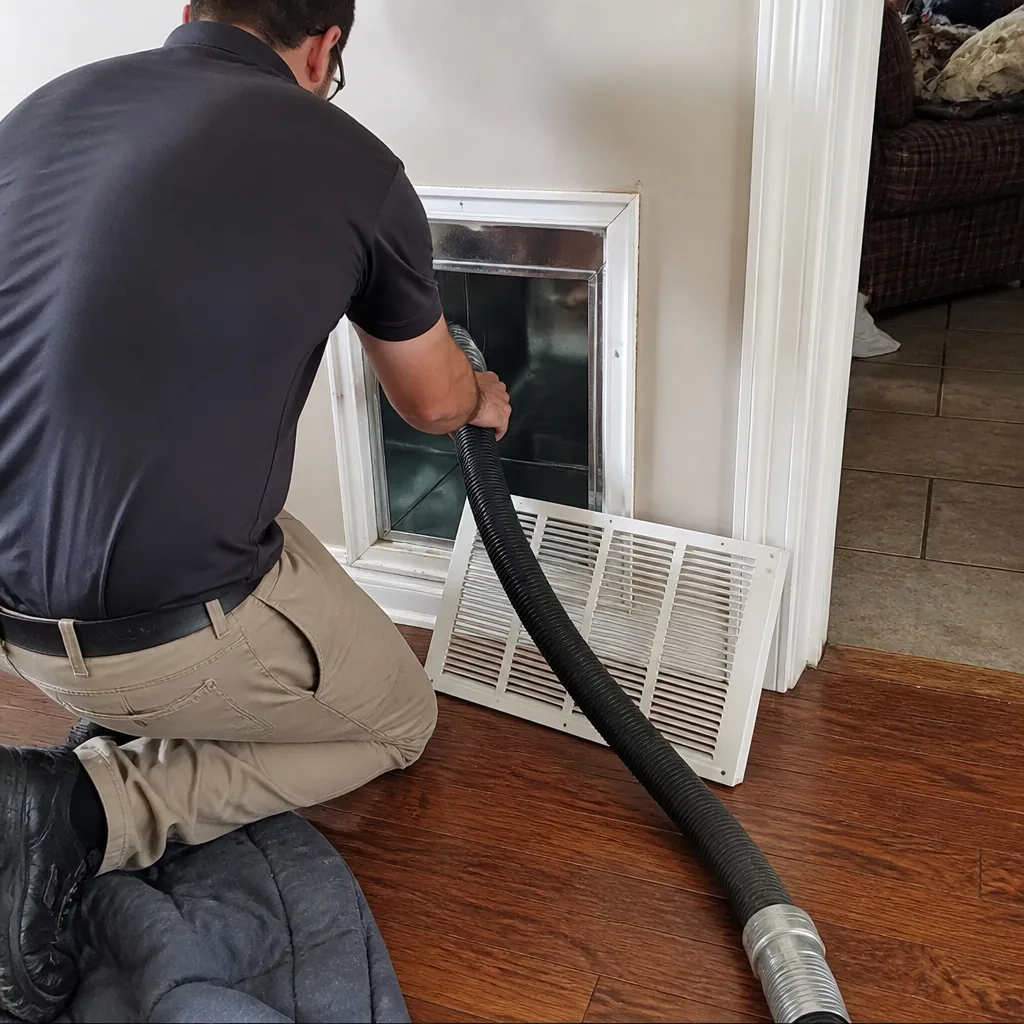
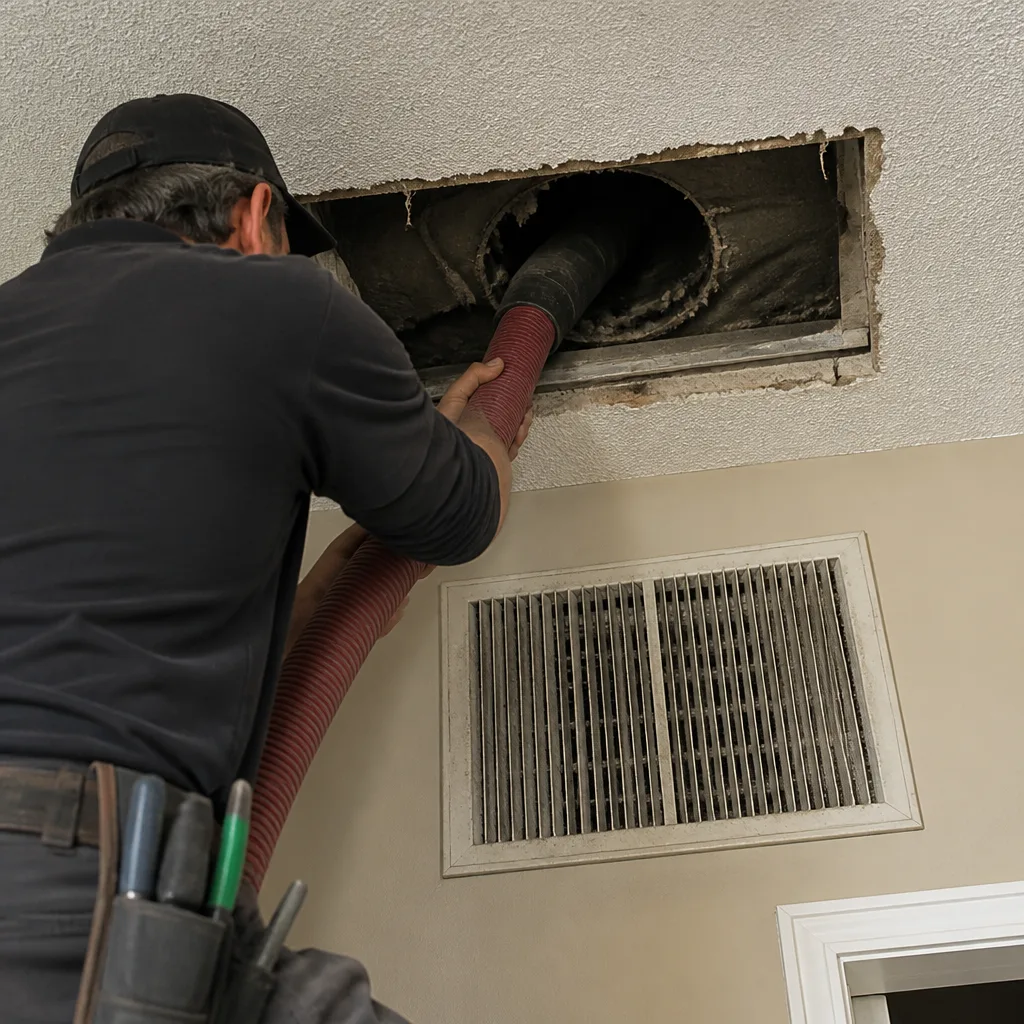
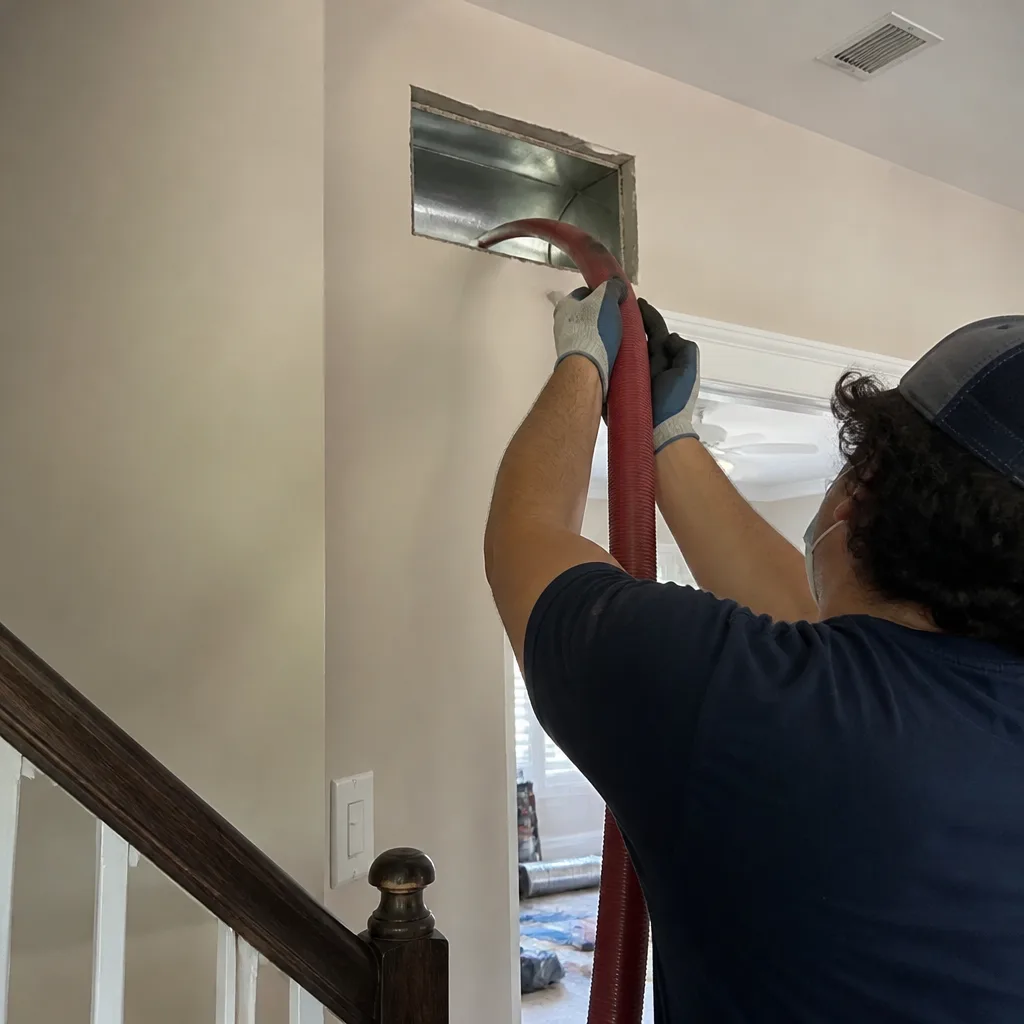
Whole-system duct and dryer vent check with before-and-after photos - you see exactly what came out of your vents
That "$99 whole-house special" is a bait ad - the real number appears once they are in your hallway, or the "clean" is a shop-vac at the register. We photograph the inside of your ducts before and after instead.
Air Duct Cleaning Maintenance Checklist for Sandy Springs Homeowners
Most Sandy Springs homeowners replace their HVAC filter on a schedule and assume the ductwork behind it is taking care of itself. That assumption is expensive. The filter only protects the equipment from what comes through the return grille; it does nothing for the supply-side buildup, the flex duct pulling loose in the attic, or the return plenum that has been collecting dust since the last remodel. This checklist exists because a duct system talks to you if you know where to look. By the end of this guide, you will know exactly which checkpoints to observe between professional Air Duct Cleaning visits, what is normal for a Sandy Springs system, and which findings mean it is time to call someone before the problem compounds.
Quick Answer
An air duct maintenance checklist for Sandy Springs homeowners comes down to six observable checkpoints: replace the filter on schedule with the right MERV rating, inspect supply registers and return grilles for dust patterns, check accessible flex duct connections in the attic, watch for pollen loading during Sandy Springs’ March-May and September-October seasons, log what you see so a contractor has history instead of guesswork, and call a professional when you find moisture, mold, or disconnected ductwork. Run the visual checks every 90 days and you’ll catch most duct problems a full year before they show up as a repair bill. A five-minute inspection catches what a filter swap misses.
Styles & brands we work with
Table of Contents
- The Filter Is the First Checkpoint, Not the Whole System
- Supply Registers and Return Grilles: What the Dust Pattern Tells You
- Flex Duct Connections: The Attic Check Nobody Runs
- How Sandy Springs Pollen Seasons Load Your Return Ducts Differently
- Filter Selection and MERV Rating: Matching the Filter to Your System’s Static Pressure
- How to Log Duct Observations Over Time
- DIY vs. Professional: Which Checklist Findings You Can Address Yourself
- Common Mistakes to Avoid
- When to Call a Professional
- Frequently Asked Questions
The Filter Is the First Checkpoint, Not the Whole System
The filter is the first line of defense for a duct system, but most homeowners in Sandy Springs who replace it on schedule are still running a clogged return plenum they’ve never looked at. Here’s why that matters: the filter sits at the junction where return air enters the air handler. Everything upstream of the filter, including the return grille, the return duct run, and the return plenum, is exposed to unfiltered air. Those surfaces load with dust, pet hair, and pollen continuously. The filter change keeps the equipment clean but does nothing for the ductwork behind it.
Run this checkpoint every 30 to 90 days depending on your household’s dust load, pet count, and whether you’re in a high pollen window.
- Confirm the filter is actually seated correctly. A filter that slides down or bows lets air bypass around the edges. That bypass air carries dust straight into the blower and supply ducts.
- Check the filter’s visual condition, not just the calendar. In Sandy Springs, a filter that would last 90 days in November may be fully loaded in six weeks during the March-April pollen push. Look at the filter media: if you can’t see the pleats distinctly through the dust layer, it’s done.
- Note what the filter caught. Gray, fluffy material is household dust. Yellow-green powder is pollen. Black or sooty residue near the edges can indicate candle use, a gas appliance issue, or a duct leak pulling attic air. What the filter catches is a diagnostic readout, not just a maintenance item.
If you’re not sure which filter your system actually needs, the Air Duct Cleaning in Sandy Springs process begins with a system inspection that includes filter compatibility because the wrong filter causes more problems than the right one solves.
Supply Registers and Return Grilles: What the Dust Pattern Tells You
Supply registers and return grilles are the two places where duct problems become visible without tools or attic access. Every homeowner in Sandy Springs can run this check in under ten minutes, and the patterns you’ll see are more diagnostic than most people realize.
On supply registers, look for these three things:
- Dust streaking on the wall or ceiling around the register. When a supply register throws air across a wall surface, and that air carries dust, it deposits in a visible streak pattern. If you wipe it and it comes back within weeks, the ducts are loading with particulate, not just circulating household dust.
- Gray or black staining on the register face itself. This is almost always a sign of duct leakage at that connection point. Air is escaping around the boot, pulling attic or crawlspace dust along with it.
- Uneven airflow from one register compared to its neighbor. Walk the house with a strip of tissue paper. Hold it at each register with the system running. If one register barely moves the tissue while another blows it horizontal, you have a restriction, a damper issue, or a duct that has separated in the run.
On return grilles, look for these patterns:
- Heavy dust matting on the grille face. This tells you the return is doing its job but the filter upstream is not catching enough. It also means the return duct itself is almost certainly loaded.
- Dust drawn to the grille from a specific direction. If the wall or floor around one side of the return grille is visibly dustier than the other, that’s a clue about where the system is pulling from and what it’s pulling in.
- Whistling or groaning at the grille when the system runs. That’s not a dirty-duct issue; it’s an airflow issue. The return is undersized for what the blower is asking for, which accelerates dust loading and shortens filter life.
These observations matter because they tell you whether you’re looking at a cleaning issue or a system issue. If the streaking returns after a cleaning, the ductwork was not the only problem. Leaks, undersized returns, and disconnected runs need repair, not just cleaning. That’s where Duct Sealing in Sandy Springs becomes the actual fix, because sealing mastic closes the gaps that cleaning alone cannot address.
Flex Duct Connections: The Attic Check Nobody Runs
Most ductwork in Sandy Springs homes is flexible duct, or flex duct, running through attics and crawlspaces. Flex duct is a wire coil wrapped in insulation, and it connects to supply boxes, return boxes, and register boots with zip ties and tape. It works fine when it’s installed correctly. The problem is that attics in Sandy Springs hit 130 to 150 degrees Fahrenheit in the summer, and that heat degrades tape adhesive, loosens zip ties, and causes the outer jacket of flex duct to sag and separate.
Here is the five-point attic checklist to run once a year, ideally in early spring before the heat and before the pollen season peaks:
- Check for disconnected or partially disconnected flex duct at the register boots. If you can see the inner liner of the duct separated from the metal collar, the system is blowing conditioned air into the attic instead of into the room. This is the single most common finding we see in Sandy Springs attics.
- Look for sagging runs. Flex duct should be supported approximately every four to five feet. Runs that droop between supports create low spots where condensation collects in the summer and where dust settles year-round.
- Inspect for compression or pinching. Ductwork that runs under plumbing, framing, or other duct runs often gets compressed. A duct compressed to half its diameter has lost much more than half its airflow.
- Check the outer jacket for tears. Small tears in the vapor barrier open the insulation to attic air. In Sandy Springs humidity, that creates condensation inside the jacket, which soaks the insulation, degrades the duct, and creates the conditions for microbial growth.
- Look for signs of pests. Rodents chew through flex duct outer jackets and, sometimes, the inner liner. Any signs of gnawing or nesting material near duct runs is a call to action, because the system is now open to the attic environment.
None of these checks requires special tools, and none of them requires you to touch the ductwork. This is observation only. If you find a problem, write it down, photograph it, and get it addressed before the next scheduled cleaning. If you are in an older Sandy Springs home with original ductwork from the 1970s or 1980s, these checks are even more important because older tape adhesives fail more readily than modern zip-tie and mastic installations.
How Sandy Springs Pollen Seasons Load Your Return Ducts Differently
Sandy Springs sits in a transitional zone between the Piedmont and the Chattahoochee River valley, and the tree canopy here is dense. That combination produces two distinct pollen loading windows: March through May, when oak, pine, hickory, and sweetgum pollens push through the air, and September through October, when ragweed and fall grasses take over. If you live in established neighborhoods with mature hardwoods, like those along Riverside Drive or in the Huntcliff area, the spring load is heavier than it is in newer construction zones with fewer large trees.
What most homeowners don’t realize is that these pollen seasons do not just dirty the filter faster. They load the return ducts in a specific way that differs from the rest of the year. Spring pollen is fine and powdery. It passes through return grilles in larger volumes, and a significant portion bypasses the filter entirely because the pollen is small enough to penetrate standard fiberglass filters. Once past the filter, it deposits on the blower, the evaporator coil, and the supply ducts.
Here’s what this means for your checklist timing:
- Run the visual checks more often during March-May and September-October. The 90-day interval becomes a 30-to-45-day interval during peak pollen loads.
- Expect to change filters at least twice as often during peak season. A MERV 8 filter that lasts three months in December may be loaded in four to six weeks in April.
- Look for pollen accumulation on supply registers in late spring. If you see yellow-green dust on supply registers in May, that means pollen got past the filter and moved through the system. That’s not just a cleaning issue; it’s a filter-grade issue, which we’ll cover in the next section.
- Check return grilles for matted pollen in the fall. Ragweed is stickier than tree pollen. It mats on grille faces and in the return duct liner, reducing airflow and loading the system in a way that spring pollen does not.
In our experience running duct systems in Sandy Springs since 2004, the homes that need cleaning most urgently are not the ones with the oldest systems. They’re the ones with the most mature tree canopy and the fewest filter changes during the two peak windows. The pollen is the loading event. The skipped filter changes are what let the loading reach the ductwork.
Filter Selection and MERV Rating: Matching the Filter to Your System’s Static Pressure
The filter aisle at the hardware store is a trap. High-MERV filters are marketed as “better for your air,” and they are, in one narrow sense. But a MERV 13 filter installed in a system that was designed for MERV 8 adds static pressure, reduces airflow, makes the blower work harder, and can freeze the coil in the summer. The right filter is the one that balances filtration with what your system can actually move air through.
Here is the practical guidance for Sandy Springs homes, which are overwhelmingly single-family with central split systems:
- MERV 8 is the baseline for most residential systems. It catches pollen, dust mite debris, and pet dander without adding meaningful resistance. If you have a standard 1-inch filter slot, MERV 8 is almost always the right choice for year-round use.
- MERV 11 is the ceiling for most 1-inch filter slots. It catches a higher fraction of fine particles, including more of the spring pollen load, but it’s also more restrictive. Do not run MERV 11 in a 1-inch slot unless your system is relatively new and the ductwork is in good condition.
- MERV 13 and higher belong in media cabinets, not 1-inch slots. A 4-inch or 5-inch media filter has dramatically more surface area, so it can run MERV 13 without the static pressure penalty. If you have allergies or respiratory sensitivities and want higher filtration, the correct move is a media cabinet from a brand like Aprilaire or Honeywell, not a higher-MERV 1-inch filter shoved into a slot that wasn’t built for it.
- Fiberglass flat panel filters are not worth the dollar you save. They protect the equipment from large debris and that’s it. They do not protect the ducts, the coil, or the people in the home from anything smaller than a grain of sand.
If you’re not sure what your system was designed for, look at the blower documentation or ask during a professional cleaning. The Hollis Air Duct Sandy Springs home team checks static pressure as part of the system walkthrough, because the filter choice and the duct condition are two halves of the same airflow equation.
One more point that gets missed even in good advice: pleated filters need to be checked more often in Sandy Springs specifically because of the spring and fall pollen windows. A filter that works fine at MERV 8 in January may become restrictive in April simply because it’s loaded. The filter’s resistance rises as it loads. If you run MERV 11 during peak pollen season and don’t check it for six weeks, your system is effectively running a loaded MERV 13, and you’ll feel it in the airflow and see it in the electric bill.
See the difference
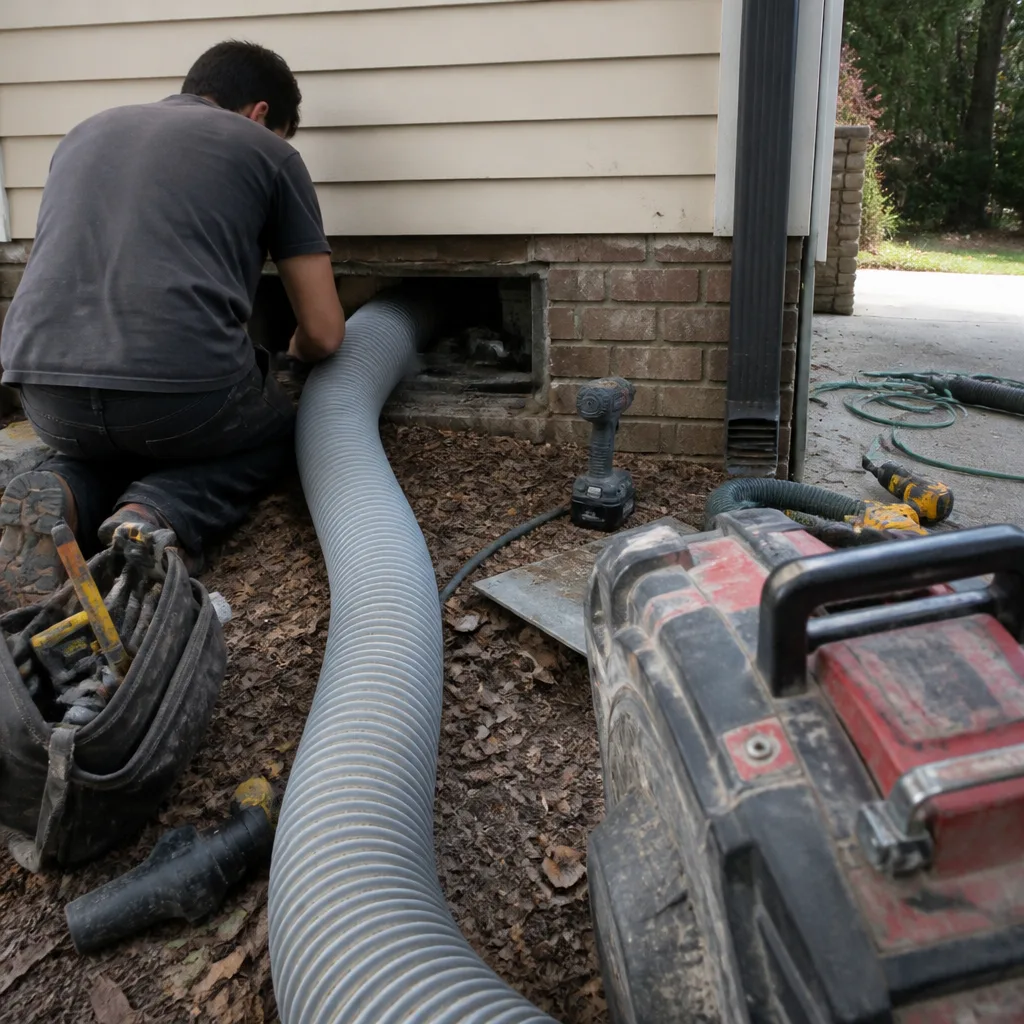 Before
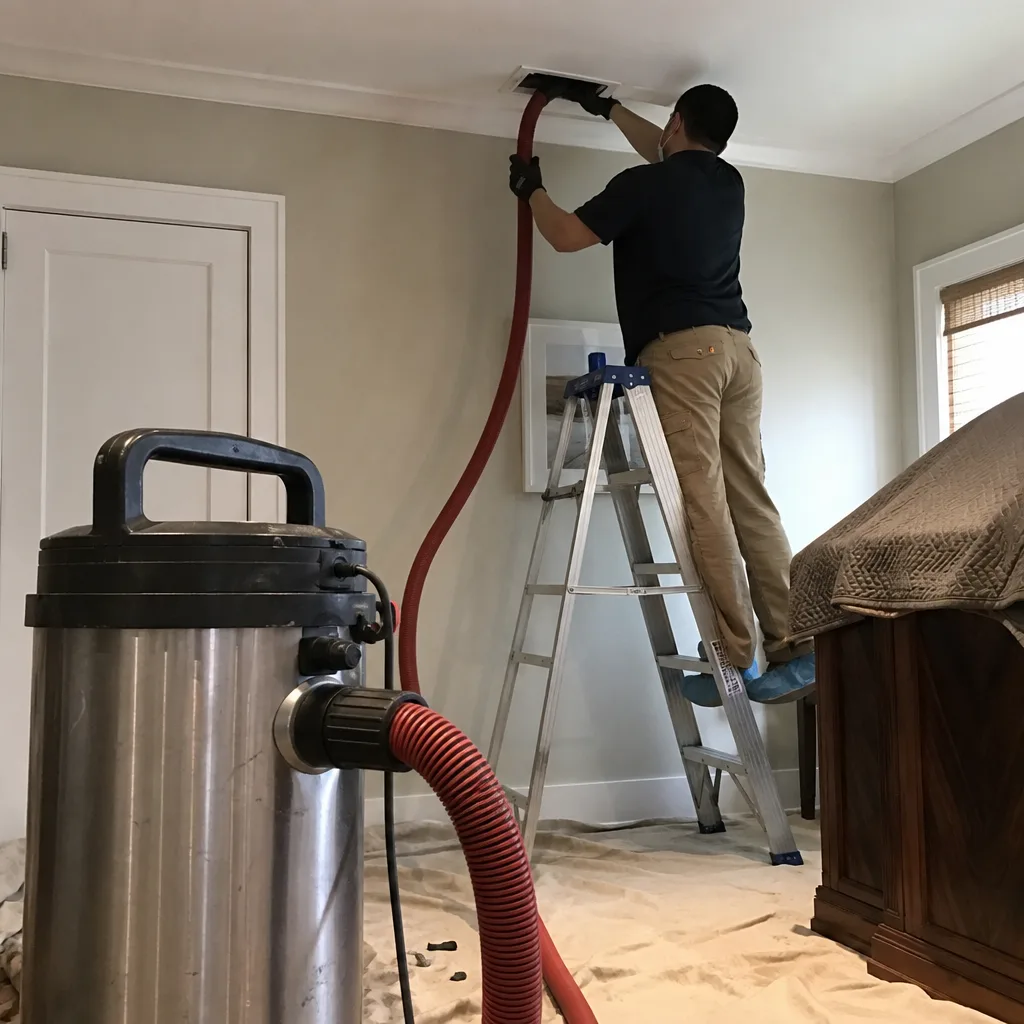 After
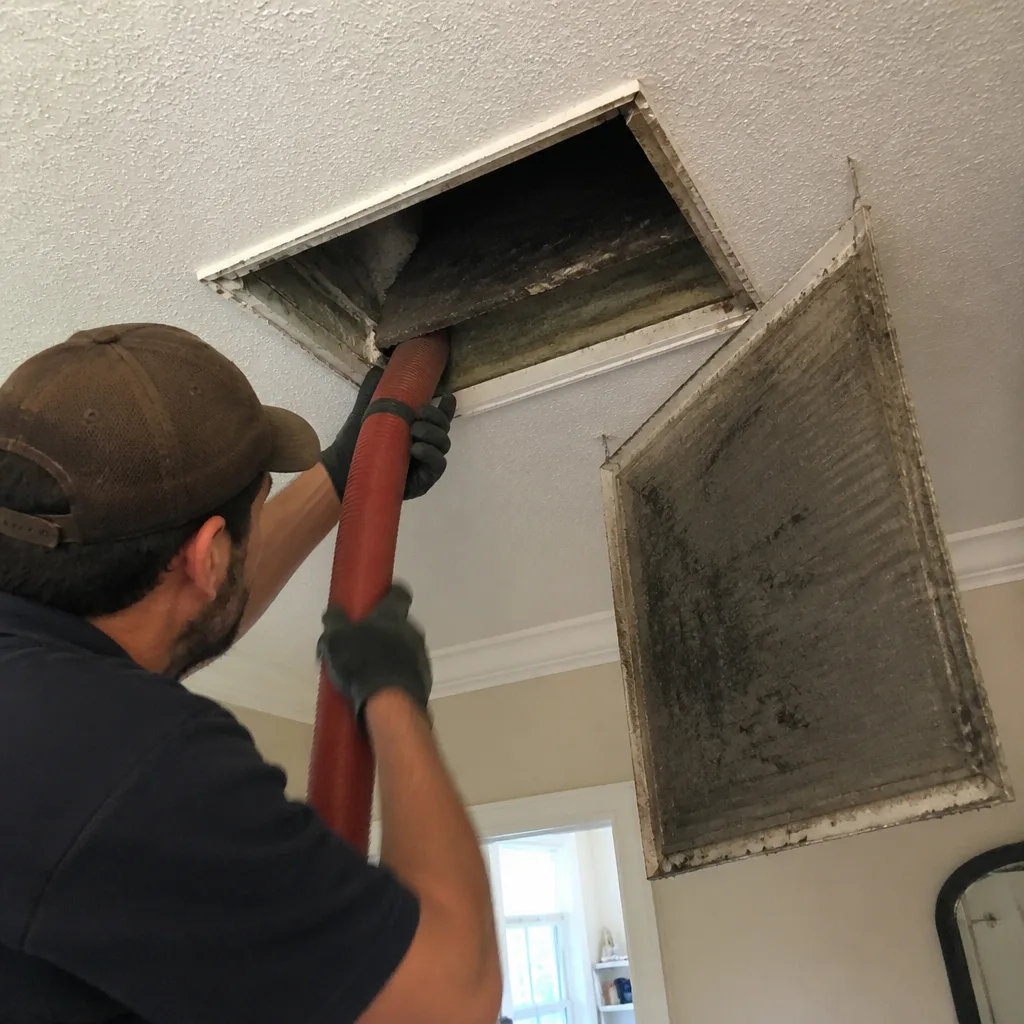 Before
 After
 Before
 After
How to Log Duct Observations Over Time
A duct system’s history matters. When a contractor shows up to clean or repair your ducts, they are looking at a snapshot in time. What they cannot see is the pattern: which registers load first, how quickly the filter reaches the replacement threshold, whether the dust buildup is seasonal or constant, and whether a leak has been getting worse. That pattern is exactly the information you can provide by logging observations between professional cleanings. The difference is that a contractor with a history can diagnose a system; a contractor without one is only guessing based on what’s visible that day.
Here’s a simple logging method that takes less than five minutes per inspection:
- Create a one-page note file, either on paper or on your phone. Date each entry. Note the filter condition, the outdoor pollen load, and anything unusual at the registers or grilles. No need for full sentences; keywords work.
- Photograph anything that catches your eye. Photo metadata timestamps your observations. A photo of a dusty register from March that shows the same streak in June is proof the problem is ongoing, not a one-time event.
- Log filter changes with the date, brand, and MERV rating. Ten months of filter change logs tells you exactly how much faster the filter loads in spring than in winter, and that tells you whether your system is pulling in more outdoor air than it should.
- Note anything in the home that changed: a renovation, a pet, a candle habit, a new gas appliance. Duct loading patterns change when the home environment changes. A log that notes “kitchen remodel, September” next to a sudden spike in construction dust at every supply register explains a lot.
- Bring the log to any service visit, or share it before the technician arrives. A contractor who reads a year of observations before touching the system arrives with a hypothesis instead of a blank slate.
Roy Castellanos, owner at Hollis Air Duct Sandy Springs, has said the single most useful thing a homeowner can hand a technician is not a set of keys. It’s a maintenance log with dated observations. A system that has been observed over time is a system that can be diagnosed correctly the first time.
DIY vs. Professional: Which Checklist Findings You Can Address Yourself
Most of what this guide describes is observation, not intervention. That’s intentional. There are very few duct-system tasks that a homeowner should attempt without training and the right equipment, and attempting the wrong ones can make the problem worse. Here is the split, clearly drawn.
What you can do yourself:
- Replace the filter. This is your task. Buy the right MERV rating for your system, install it in the correct orientation, and log the date.
- Wipe supply registers and return grilles. Removing dust from the register face and the surrounding wall or ceiling keeps surface dust from re-entering the airstream. Use a damp cloth; do not shove anything into the duct opening.
- Check for drafts at register boots. If you feel air escaping around the register when the system is off, you have a leakage issue at that point. You’re not going to fix it yourself, but identifying it is half the job.
- Keep the area around return grilles clear. Furniture, rugs, and stored boxes that block a return grille starve the system of airflow. Move the obstruction; that’s a legitimate homeowner repair.
- Update your observation log. The most valuable thing on this list.
What calls for a professional before the next scheduled cleaning:
- Visible mold or microbial growth anywhere in the duct system. Not all dark staining is mold, but any growth means there’s a moisture source that has to be found and corrected before cleaning can work.
- Disconnected or partially disconnected flex duct in the attic or crawlspace. This is a repair, not a cleaning. A disconnected run in a Sandy Springs attic can lose 20 to 30 percent of the system’s conditioned air into a space that doesn’t need it.
- Water staining or rust inside the duct run or at the plenum. Water always comes from somewhere, and cleaning ducts that are still getting wet is wasted money. The source has to be found first.
- Any finding that involves the blower, the coil, or the air handler interior. These components require tools, experience, and safety procedures. The blower has moving parts and electrical connections; the coil has refrigerant lines. Neither is a homeowner’s job.
- Pest evidence in the ductwork. Rodent droppings and nesting material are a health issue, and the ducts need cleaning plus sealing of the entry points. Cleaning alone will not keep them out.
The rule is simple: if a checklist finding involves touching the ductwork beyond replacing a filter or wiping a grille, it’s a signal to call. The professional equipment used for real duct cleaning, the negative-air machines from Nikro and the rotary brush systems from Rotobrush, exists because duct interiors cannot be cleaned with a shop vac and a dryer sheet. When the checklist says “call,” call.
Common Mistakes to Avoid
- Running a high-MERV 1-inch filter to “protect the family” without checking static pressure. A MERV 13 in a 1-inch slot restricts airflow, raises energy costs, and can freeze the coil in a Sandy Springs summer. The system was not designed for that filter.
- Replacing the filter on schedule but never looking at the return grille. The return plenum, return duct run, and grille face are all upstream of the filter. They load with unfiltered air continuously, and a filter change does not clean them.
- Running fiberglass flat panel filters because they’re cheap. These protect the equipment from coarse debris and nothing else. The ducts, the coil, and the indoor air get no meaningful filtration.
- Ignoring register streaking after a professional cleaning. If the streaks come back within weeks, the cleaning was not the issue. There’s a leak or a loading source that was never addressed.
- Never going into the attic to look at the duct runs. Most Sandy Springs homes have all their ductwork in the attic, and most duct failures happen there first. A disconnected flex duct that goes unnoticed for a year is a year of conditioned air blown into a 140-degree attic.
- Waiting until the spring pollen cloud to schedule duct cleaning. By late March, every duct cleaning company in metro Atlanta is booked. The time to clean is before or after the peak, not during it.
- Treating duct cleaning and duct sealing as the same service. They are not. Cleaning removes what’s inside. Sealing, using duct mastic, closes the leaks that let the dust back in. A system with significant leakage needs both, and cleaning alone will produce a system that reloads within months.
When to Call a Professional
Some findings on this checklist are beyond observation. Call a professional when you see water staining or rust inside a duct, visible mold growth, disconnected flex duct in the attic, pest evidence in the system, or register streaking that returns within weeks of cleaning. These are repair issues, not maintenance issues, and they will not resolve on their own. A system that has gone five or more years without professional cleaning is also a candidate for a full cleaning, even if the visual checks look acceptable, because the duct interior accumulates what the register faces never show. Dryer Vent Cleaning in Sandy Springs is a separate service that should be on your annual list as well, because a clogged dryer vent is a fire hazard that has nothing to do with your HVAC ducts. Hollis Air Duct Sandy Springs offers free estimates in Sandy Springs, and the price is written down before any work starts. Call (229) 489-7780.
Frequently Asked Questions
Every three to five years for most Sandy Springs homes, with the shorter interval applying if you have pets, allergy sensitivities, recent renovation work, or a mature tree canopy that loads the system with pollen every spring and fall. Check Air Duct Cleaning Permits, Codes & Inspections in GA: What You Need to Know before scheduling. Homes near heavy tree cover along the Chattahoochee corridors often benefit from cleaning every two to three years because the return ducts load faster than average. Call (229) 489-7780 for an assessment of your system’s actual condition rather than a calendar-based guess.
Whole-system air duct cleaning in Sandy Springs typically runs between $350 and $650 for a single-family home, depending on the number of supply and return runs, the accessibility of the ductwork, and whether the system has never been cleaned or has just gone a few years. Homes with crawlspace ductwork or extensive flex runs in the attic trend toward the higher end. Beware of quotes far below that range; the duct cleaning industry has a bait-and-switch problem, and a $79 whole-house coupon is almost never the final price. Hollis Air Duct Sandy Springs writes the price before any work starts, and it does not move at the door. Call (229) 489-7780 for a free estimate.
Cheaper quotes almost always mean one of three things: the company is running a bait-and-switch where a low teaser price becomes a much larger invoice once the technician is inside, the crew is not actually cleaning the full duct system, or the equipment is inadequate for the job, typically a shop vac and a brush attached to a drill. Real duct cleaning uses negative-air machines and rotary brush systems that cost thousands of dollars and require trained operators. A price that cannot cover that equipment and a trained tech is not a real quote. Hollis Air Duct Sandy Springs gives one written price before work starts, and the 365-Day Done Right Promise covers the work in writing for a full year. Call (229) 489-7780.
Ask for before-and-after photos of the duct interior, specifically the return plenum, a supply register, and the blower area if accessible. A professional crew using negative-air equipment can show you the before-and-after difference in a way that satisfies the question instantly. Hollis Air Duct Sandy Springs provides before-and-after documentation on every job because a homeowner who can see the work is a homeowner who knows the price was honest. If a company refuses to show photos, that’s a red flag. The 365-Day Done Right Promise also gives you a full year to find anything that was missed, and Hollis returns at no charge.
Duct cleaning removes the accumulated pollen, dust, pet dander, and debris that circulate through the supply ducts and re-enter the living space every time the system runs. For Sandy Springs homeowners with spring or fall allergy symptoms, cleaning that removes the accumulated pollen load can reduce indoor particulate exposure meaningfully, especially when paired with a MERV 8 or MERV 11 filter matched to the system. Cleaning is not a cure for outdoor allergies, but it removes the reservoir of irritants that the system recycles through the house. The homes that see the most relief are the ones that clean before the spring peak, not after it.
No. A shop vac and a brush cannot reach the interior surfaces of duct runs, and attempting to clean ducts through register openings pushes debris deeper into the system rather than removing it. The equipment that actually cleans ducts, negative-air machines from Nikro and rotary brush systems from Rotobrush, creates negative pressure that pulls loosened debris out of the system entirely. That equipment is not available at the hardware store, and it requires training to operate correctly. What you can do yourself is the checklist in this guide: observe, log, replace filters, and call when you find something that needs professional attention.
The Bottom Line
Duct maintenance in Sandy Springs is not a once-a-decade event. It’s a set of checkpoints you run between professional cleanings: the filter, the registers, the grilles, the attic runs, the pollen loading windows, and the written log that turns scattered observations into a system history. Most duct failures announce themselves months before they become emergencies, and most homeowners never notice because nobody told them where to look. Now you know. Run the checklist every 90 days during normal months and every 30 to 45 days during the March-May and September-October pollen windows. When the findings say “call,” call a professional who writes the price down before work starts and stands behind it in writing. Roy Castellanos and the team at Hollis Air Duct Sandy Springs have served this city since 2004, and the phone is answered by a live person at (229) 489-7780. Free estimates, written prices, and the 365-Day Done Right Promise. That’s the standard.
Written by Roy Castellanos, Owner at Hollis Air Duct Sandy Springs, serving Sandy Springs since 2004.