
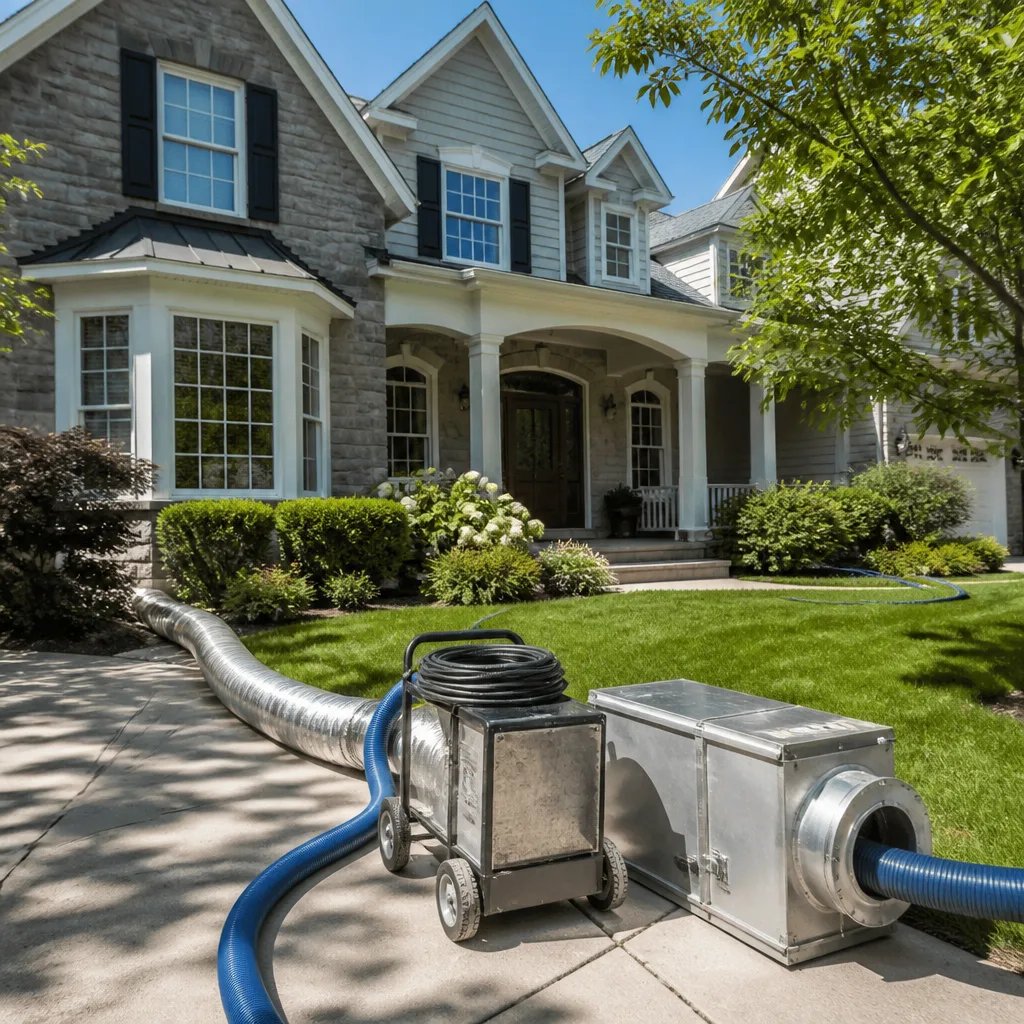
 Whole-home duct cleaning
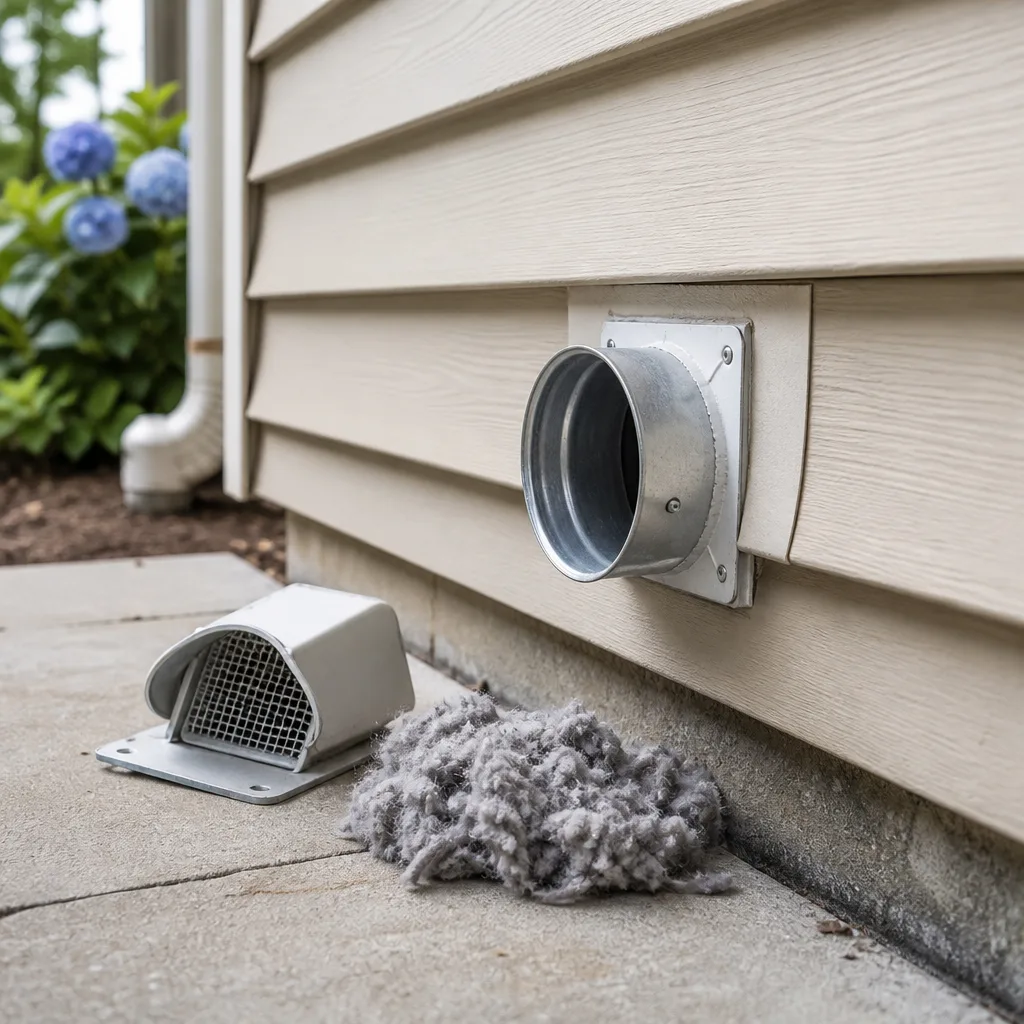 Dryer vent cleaning
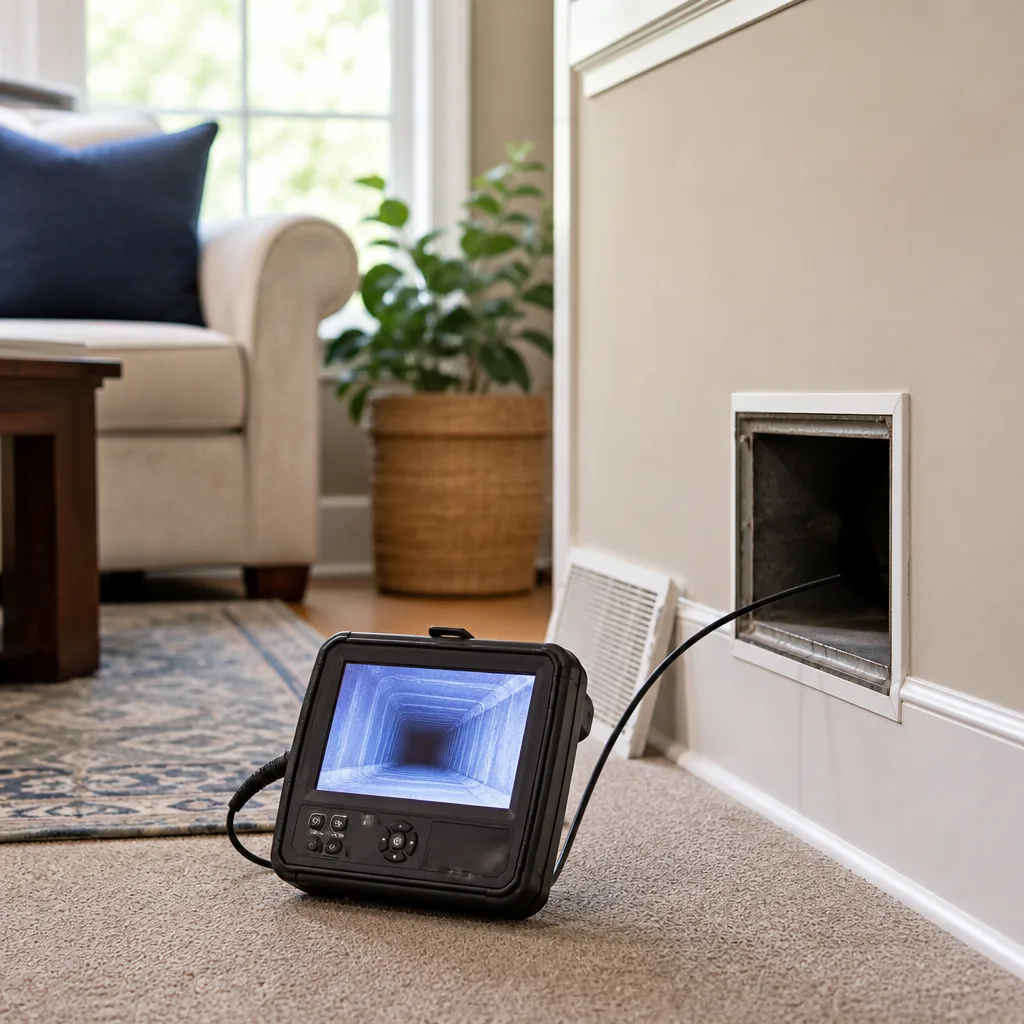 Camera inspection
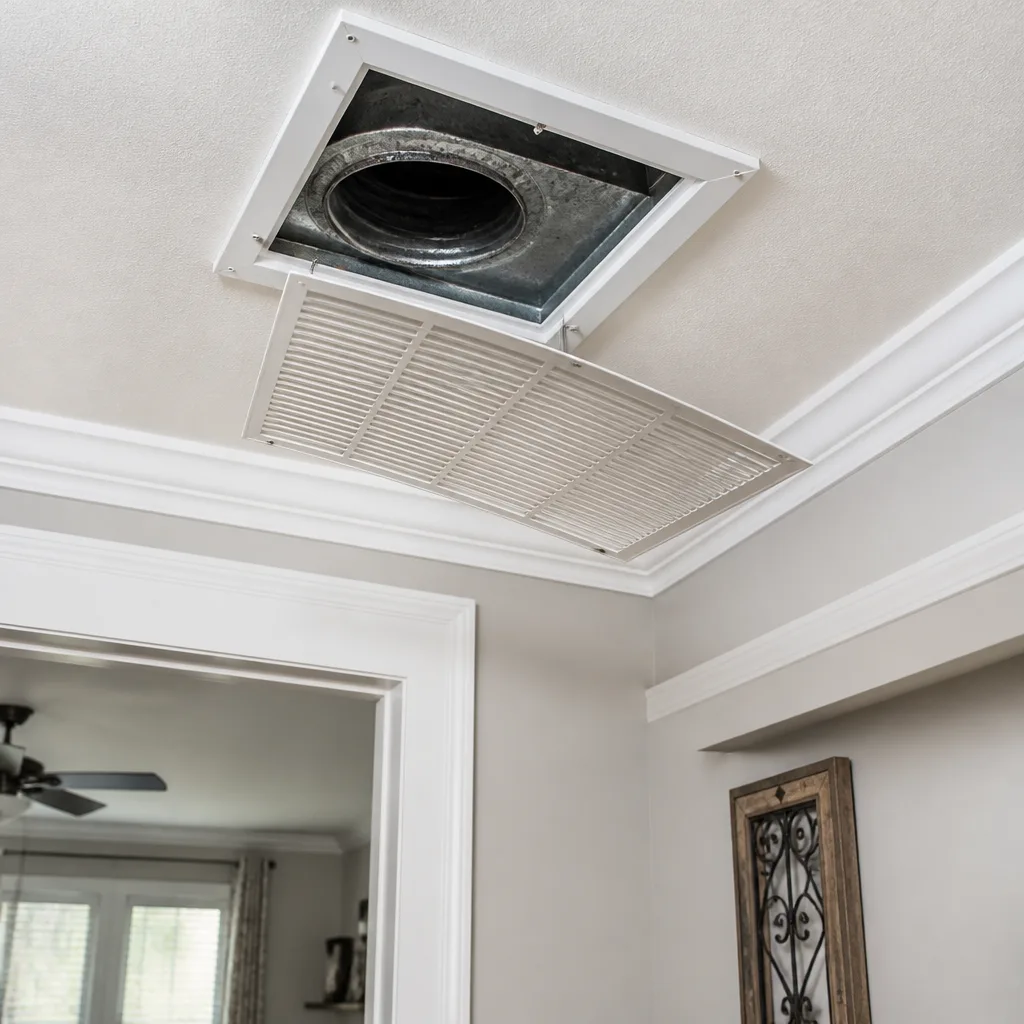 Sanitizing & deodorizing
Whole-system duct and dryer vent check with before-and-after photos - you see exactly what came out of your vents
That "$99 whole-house special" is a bait ad - the real number appears once they are in your hallway, or the "clean" is a shop-vac at the register. We photograph the inside of your ducts before and after instead.
Nikro Vent Sanitizing: The Sandy Springs Owner’s Guide
If your Nikro vent sanitizing unit has quit fogging, blown a fuse, or started leaking solution, we stock the parts and can usually have it running again same visit. Installed replacement parts for Nikro vent sanitizing systems in Sandy Springs typically run $145 to $310 depending on the model and what’s failed. Most owners discover a problem the same way: the unit powers on but produces no mist, or the mist is weak and the sanitizing solution pools inside the housing instead of moving through the ductwork.
We run Nikro equipment on our own trucks, which means we know these machines from daily use, not from a spec sheet. Roy Castellanos has been pulling ductwork apart across the Atlanta metro for the better part of two decades, and the Nikro vent sanitizing units we service in Sandy Springs tend to fail in predictable ways. The good news is most failures are a single component: a pump diaphragm, a clogged nozzle, or a worn seal. The bad news is Nikro does not sell parts direct to homeowners, so you’re either guessing online or calling someone who already knows the machine.
Which Nikro Models This Applies To
Nikro makes vent sanitizing equipment across several model lines, and the parts are not interchangeable between all of them. The most common units we service in Sandy Springs are the Nikro fogger series and their inline duct sanitizing attachments that pair with negative-air machines. Older Nikro units, especially those manufactured before 2010, use threaded brass nozzles and diaphragm pumps that are no longer in production. Newer models use quick-connect fittings and a different pump housing altogether.
Here’s the compatibility gotcha that trips up most DIY buyers: Nikro changed their fogger nozzle thread pitch around 2012. A nozzle from the current series will not seat properly in an older unit, and forcing it strips the threads inside the housing. We also see model numbers that have been worn off from years of van life. If your label is unreadable, measure the pump body width. The older diaphragm pumps measure 2.4 inches across; the newer ones are 2.8. That single measurement tells us which parts family you need.
We keep both OEM Nikro parts and quality aftermarket equivalents on the truck. For pumps and seals, the aftermarket options from Rotobrush suppliers hold up as well as OEM and cost 20 to 30 percent less. For nozzles and electrical boards, we recommend OEM only. The aftermarket boards have a failure rate in Georgia’s humid summers that we’re not willing to put our name on.
One note for clarity: Hollis Air Duct Sandy Springs is an independent service provider. We are not affiliated with Nikro, and we make no claim to be an authorized Nikro service center. We do use their equipment daily, stock their common parts, and know their machines well enough to tell you when a repair beats a replacement.
Styles & brands we work with
Signs Your Nikro Vent Sanitizing Is Failing
These are the five failure patterns we see most often on Nikro vent sanitizing equipment in Sandy Springs. Each one points to a specific cause, and knowing which one you’re dealing with saves time on the phone.
- The unit runs but produces no mist. Nine times out of ten, this is a failed pump diaphragm. The motor still spins, which fools you into thinking the pump is working, but the diaphragm has cracked and there’s no pressure behind the nozzle. It’s a $35 to $60 part and about 20 minutes of labor.
- Weak mist with large droplets. This is usually a partially clogged nozzle or a kinked solution line. Sandy Springs has hard water in most neighborhoods, and if the previous owner ran anything other than distilled water through the unit, mineral buildup narrows the nozzle opening over time. Soaking rarely works; replacement is the reliable fix.
- Sanitizing solution leaking from the pump housing. The pump seals have failed. Left alone, the leaking solution works its way into the motor and kills the whole unit. If you catch this early, it’s a seal kit and an hour of bench time. If you wait until the motor shorts, you’re buying a new unit.
- Unit trips a breaker or GFCI when powered on. This is an electrical short, usually in the power cord strain relief where the cord enters the housing. Do not keep resetting the breaker. We’ll open the housing, replace the cord and strain relief, and check the motor windings for damage before we hand it back.
- The fog smells weak or the solution isn’t reaching the far vents. On inline systems, check the hose connections between the Nikro unit and your duct access point. Any air gap kills the negative pressure that pulls sanitizer through the system. We see this right after homeowners move equipment or have other duct work done and a clamp doesn’t get retightened.
Replacement Cost & What’s Included
In Sandy Springs, you should expect to pay between $145 and $310 installed for most Nikro vent sanitizing part replacements. The biggest driver of price is which component has failed. A nozzle replacement settles around $145. A pump diaphragm or seal kit lands in the $180 to $240 range. An inline hose assembly or electrical board with labor runs $250 to $310 in most cases.
Every quote we give includes the part, the labor to install it, and a function test before we leave. We test the unit on your actual ductwork, not on a bench in the van, because that’s the only way to know the correct pressure and mist output are there. If the fix requires a part we don’t have on the truck, we tell you the price up front, order it, and schedule the return visit before we leave. You get one written price per repair, and it does not change at the door.
The Nikro parts we install are covered by our 365-Day Done Right Promise. If the part or the installation fails within a year, we return and make it right at no charge, including a free second visit. That’s in writing on every job.
See the difference
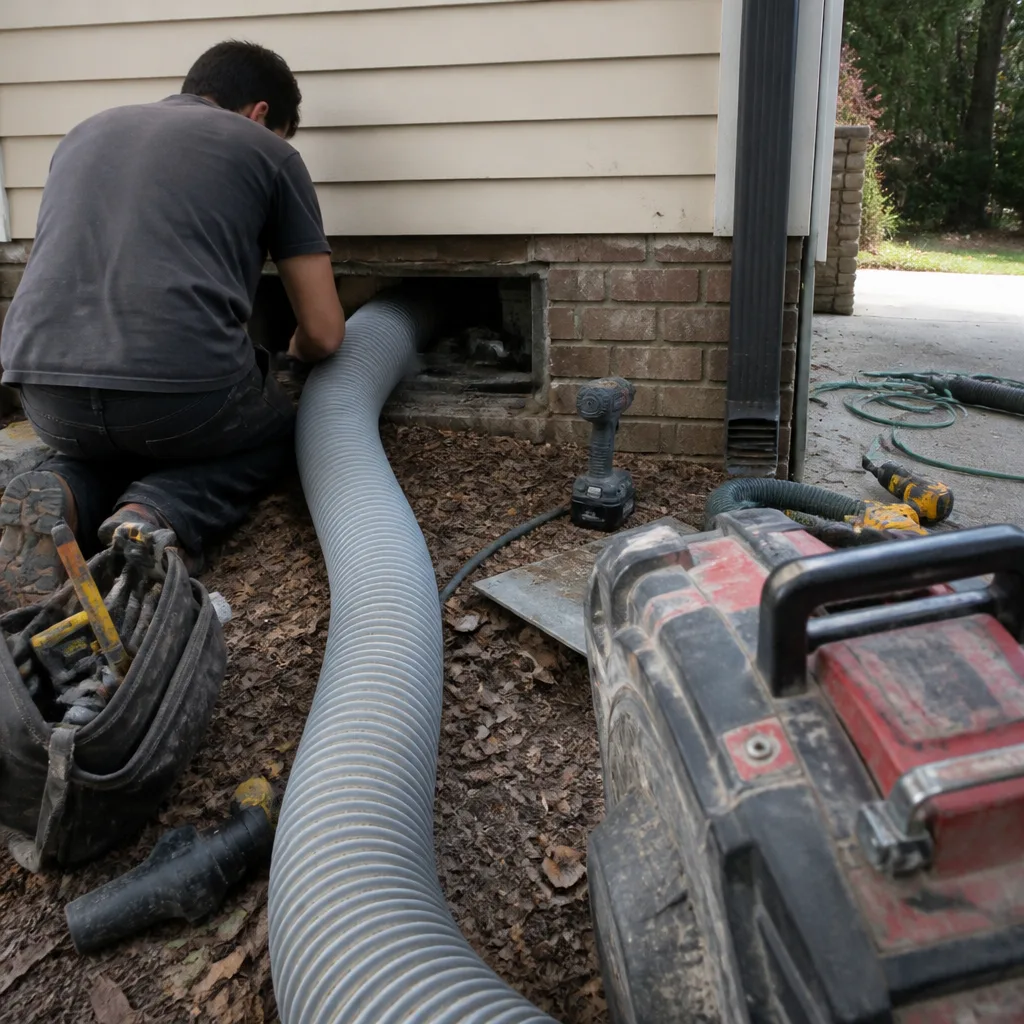 Before
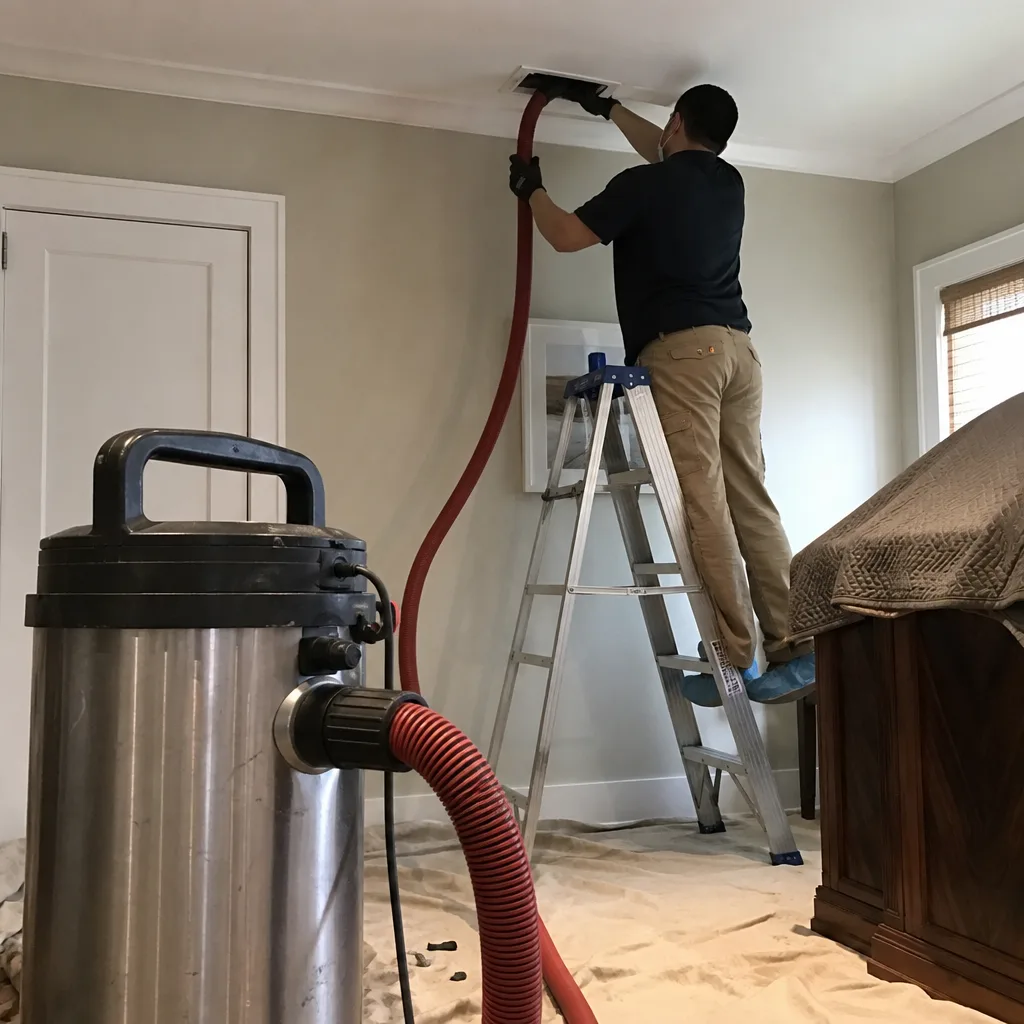 After
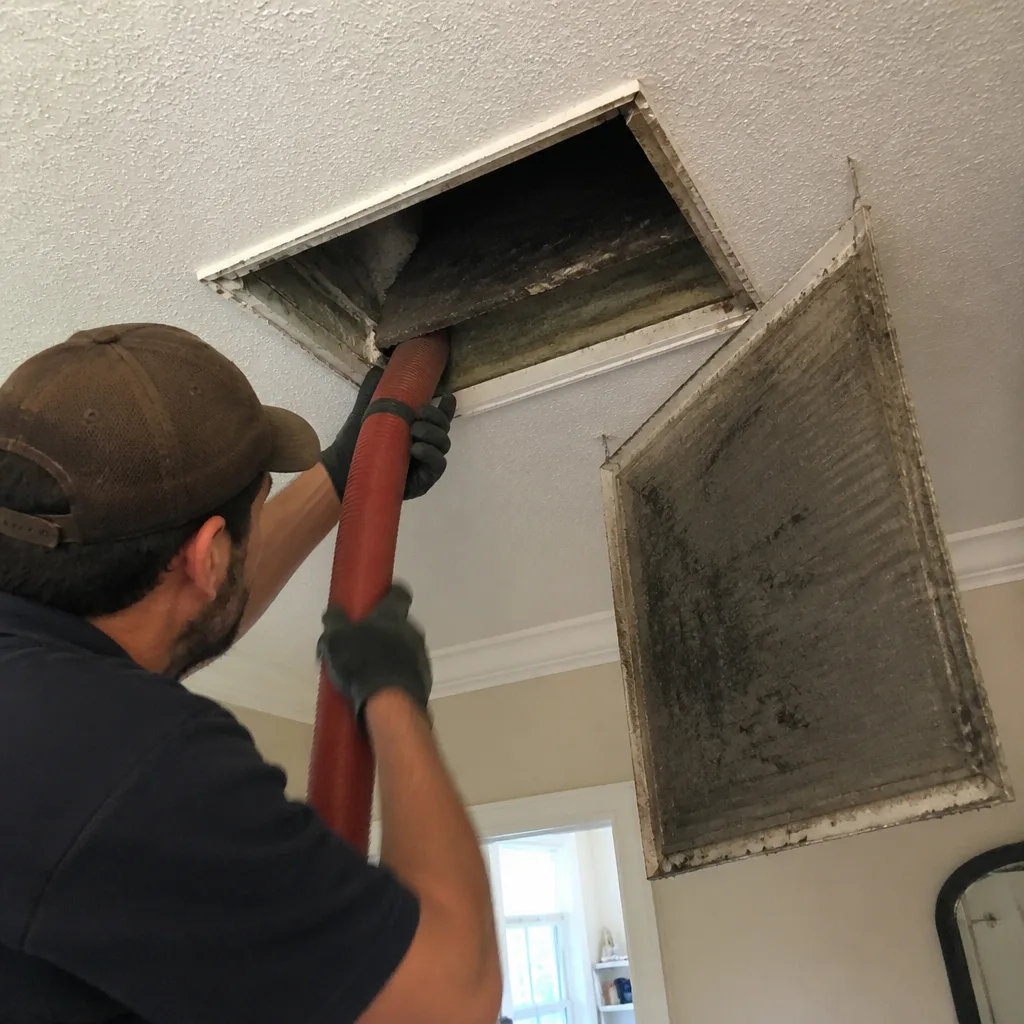 Before
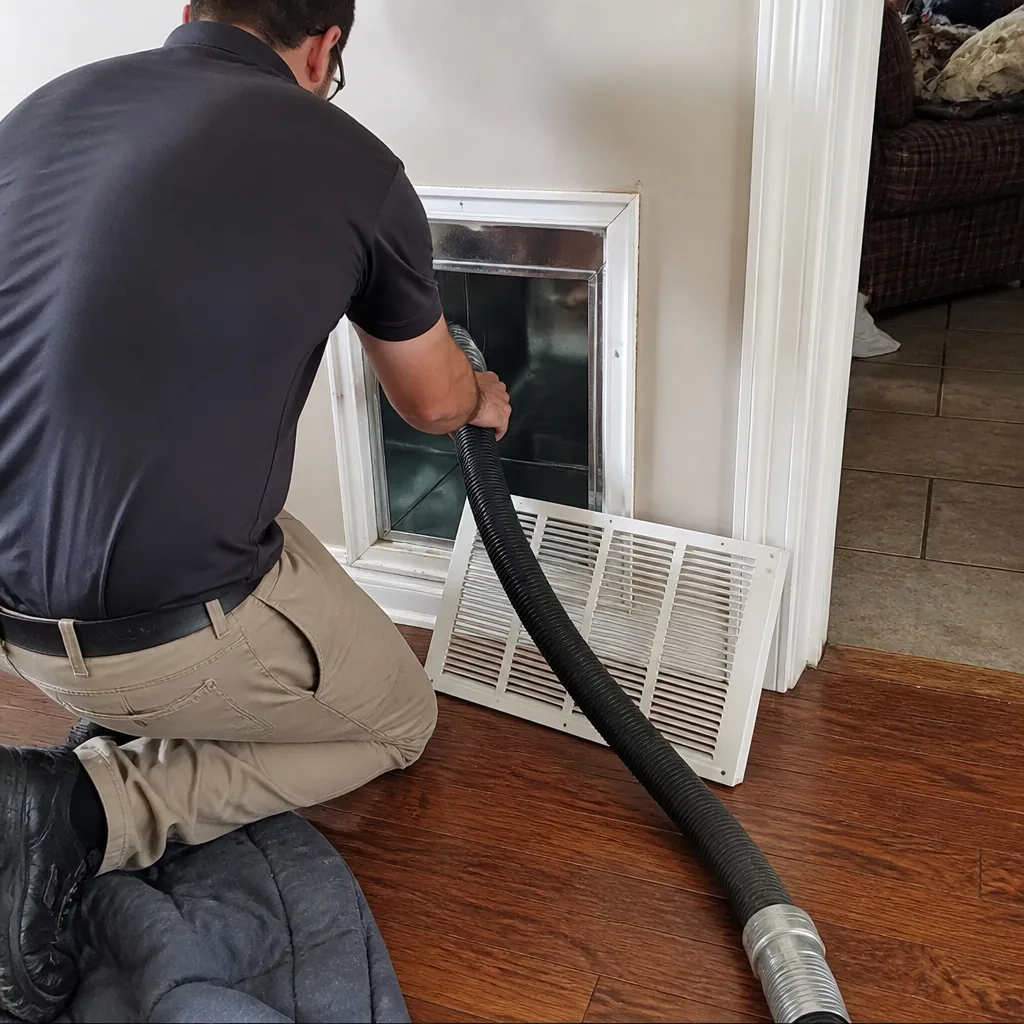 After
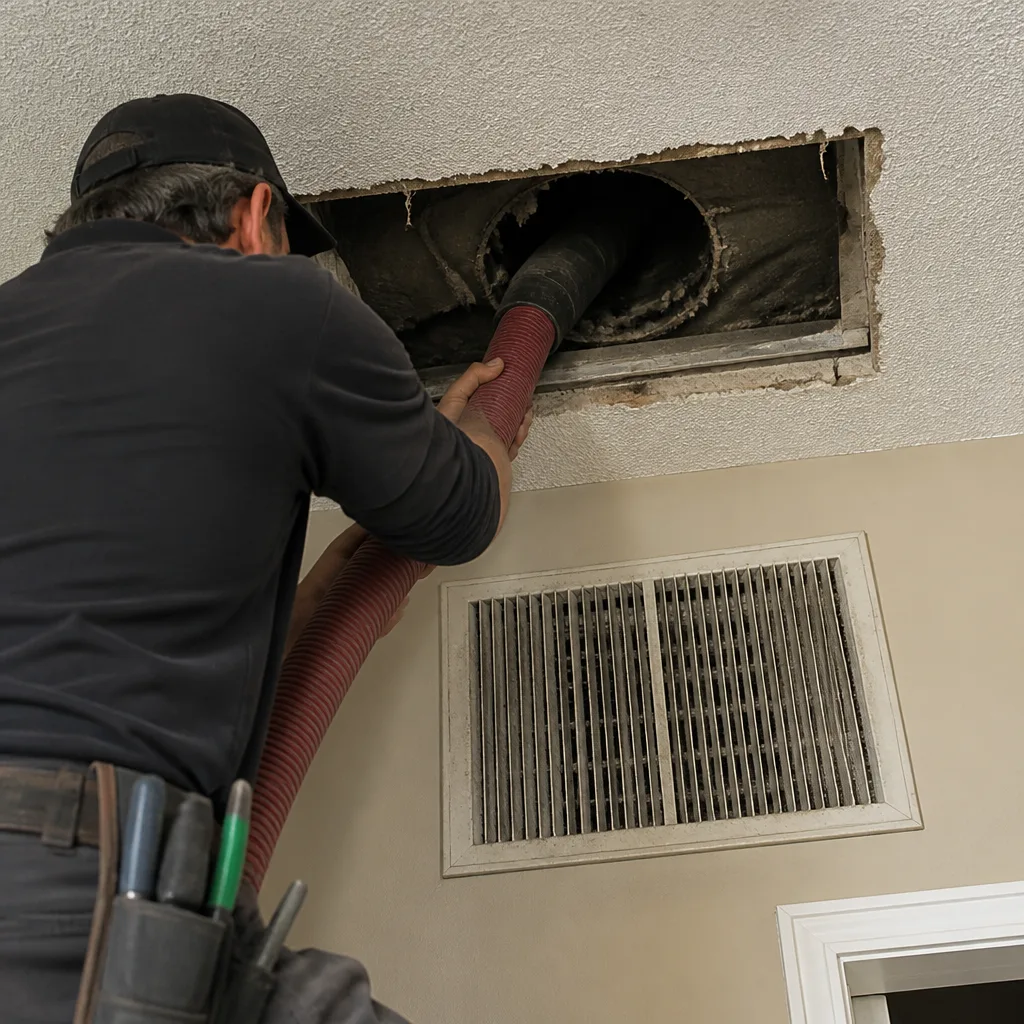 Before
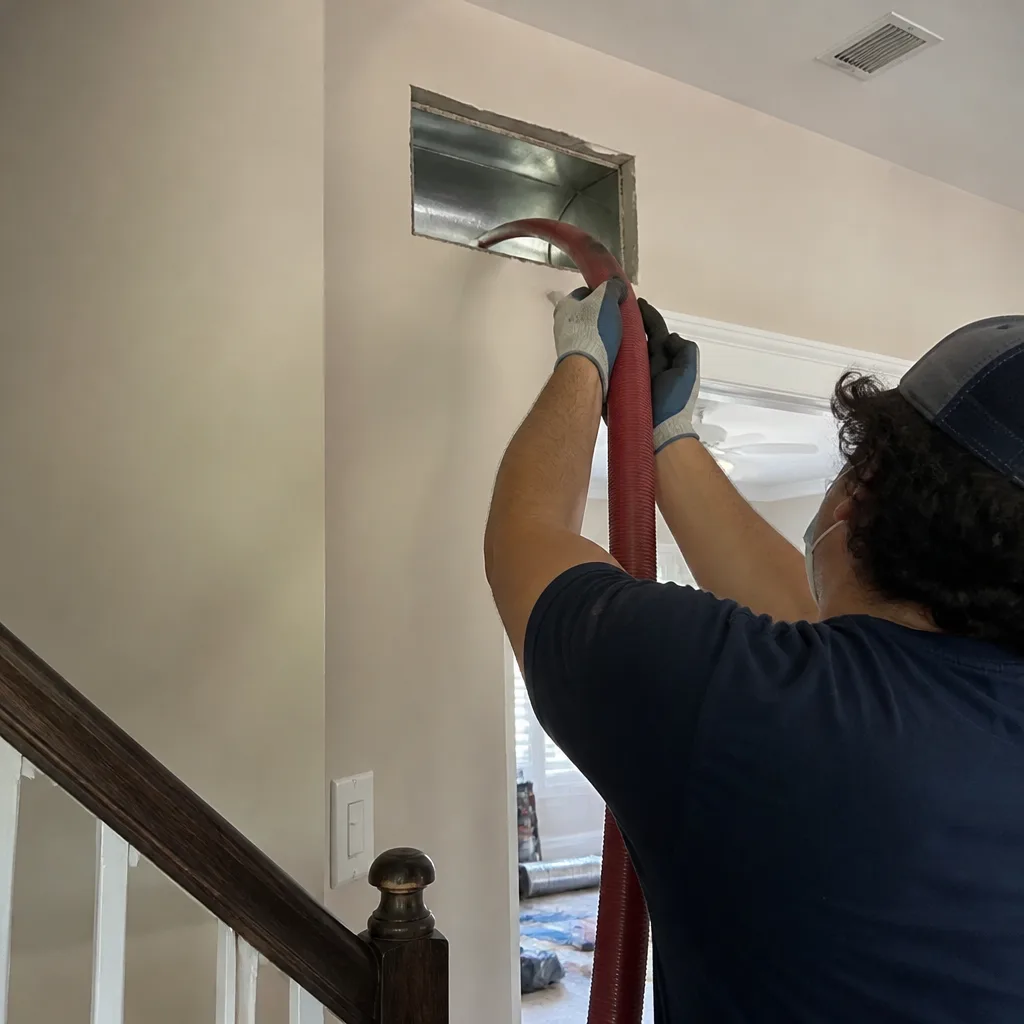 After
DIY or Call Us?
There’s a short list of things you can safely check yourself before calling. Confirm the unit is getting power to the outlet. Check that the solution tank has enough sanitizer and that the pickup tube isn’t kinked. Inspect the hose clamps on inline systems and make sure all fittings are seated. These are visual and tactile checks; nothing requires opening the housing.
Where DIY goes wrong is opening the pump housing or swapping electrical components. Nikro units use a high-pressure pump that holds residual sanitizing solution under pressure even when unplugged. Opening the housing incorrectly sprays that solution into your face, and we’ve seen more than one eye injury from it. Sanitizing solution is also corrosive to wiring, so a half-repaired leak that drips onto the board turns a $200 repair into a dead unit. If the symptom is anything beyond a loose clamp or an empty tank, call us at (229) 489-7780 and we’ll give you a straight read on what it needs and what it’ll cost.
FAQs
A Nikro vent sanitizing unit used professionally and maintained on schedule typically lasts 6 to 9 years before major components need replacement. The pump is usually the first part to go, and in Georgia’s humidity, seals and diaphragms wear faster than the manufacturer’s dry-climate averages. Most units we see retired are not killed by big failures; they’re killed by small leaks that went ignored. If you’re running the unit weekly, expect to replace pump seals about every 2 to 3 years. If you’re running it monthly, you may go 5 years or more between pump repairs.
Yes, if it’s a diaphragm or seal failure, we can rebuild the pump on our bench with a seal kit for less than half the cost of a new pump. The catch is that only applies if the failure has not already damaged the motor. Once sanitizer leaks into the motor housing, the corrosion spreads fast and rebuilding the pump is throwing good money after bad. We’ll open it up and tell you which situation you’re in. If it’s rebuildable, we rebuild it; if it’s not, we tell you that too.
Most Nikro vent sanitizing part replacements take between 30 and 60 minutes in your driveway or at our shop. A nozzle swap is under 30 minutes. A pump rebuild on the bench takes closer to 90 minutes. If we have the part on the truck, we do it same visit, test it on your ductwork, and leave the site clean. If we need to order a part, the return visit takes under an hour in almost every case.
Yes. We keep common Nikro nozzle assemblies, pump diaphragms, seal kits, hose clamps, and power cord strain reliefs stocked on the truck. We also keep a small inventory of aftermarket pump equivalents from Rotobrush for the older model lines. Less common items like inline hose assemblies and electrical boards are ordered with the exact model confirmation before we quote you a final price. You’ll know the cost before we order anything. Call (229) 489-7780 and tell us your model number or the pump measurement, and we’ll confirm what we have on hand that day.
Contact Hollis Air Duct Sandy Springs
If your Nikro vent sanitizing unit is down, call (229) 489-7780 and we’ll tell you what it needs, whether we can fix it today, and exactly what the repair will cost. We also stock parts for Lennox, Trane, and Carrier systems, so if the Nikro unit is paired with other equipment, we can take care of it in the same visit. Written price before work starts, clean job site when we leave, and a full year behind the fix. Clean ducts, straight answers, that’s the whole job.
Written by Roy Castellanos, Owner, Hollis Air Duct Sandy Springs at Hollis Air Duct Sandy Springs, serving Sandy Springs and nearby areas.